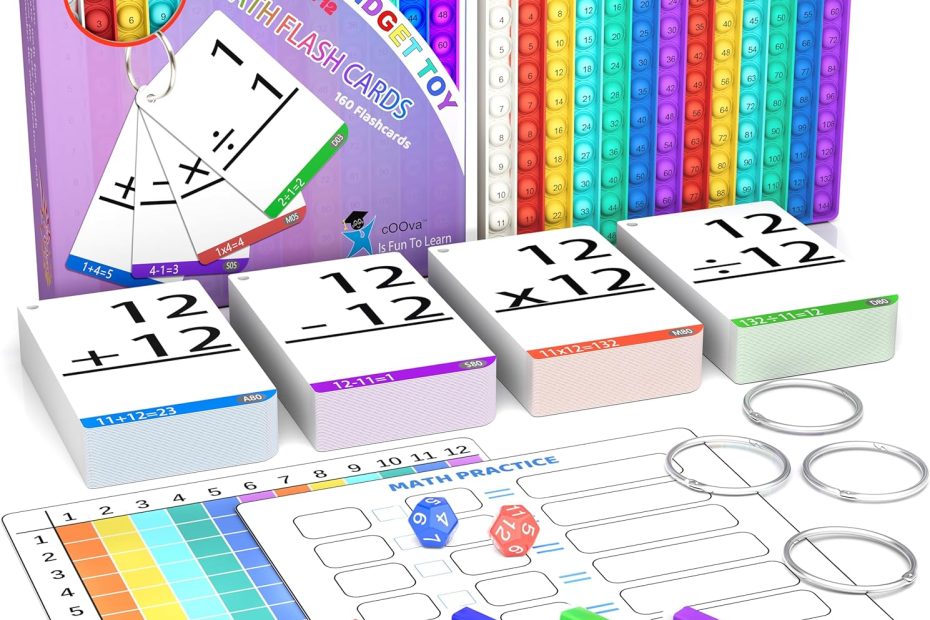
Looking for a fun way to build your child’s math skills while keeping them engaged?

Product Overview
You’re checking out Math Games for Kids – Flash Cards for Kids – Pop it Practice with Addition, Subtraction, Multiplication & Division – Ideal for Math Learning and Skill Building. This set combines tactile pop-it tools and traditional flash cards so your child can practice math facts in a hands-on way. It’s aimed at kids roughly ages 4–8, but includes activities that can stretch older learners too.
What the product includes
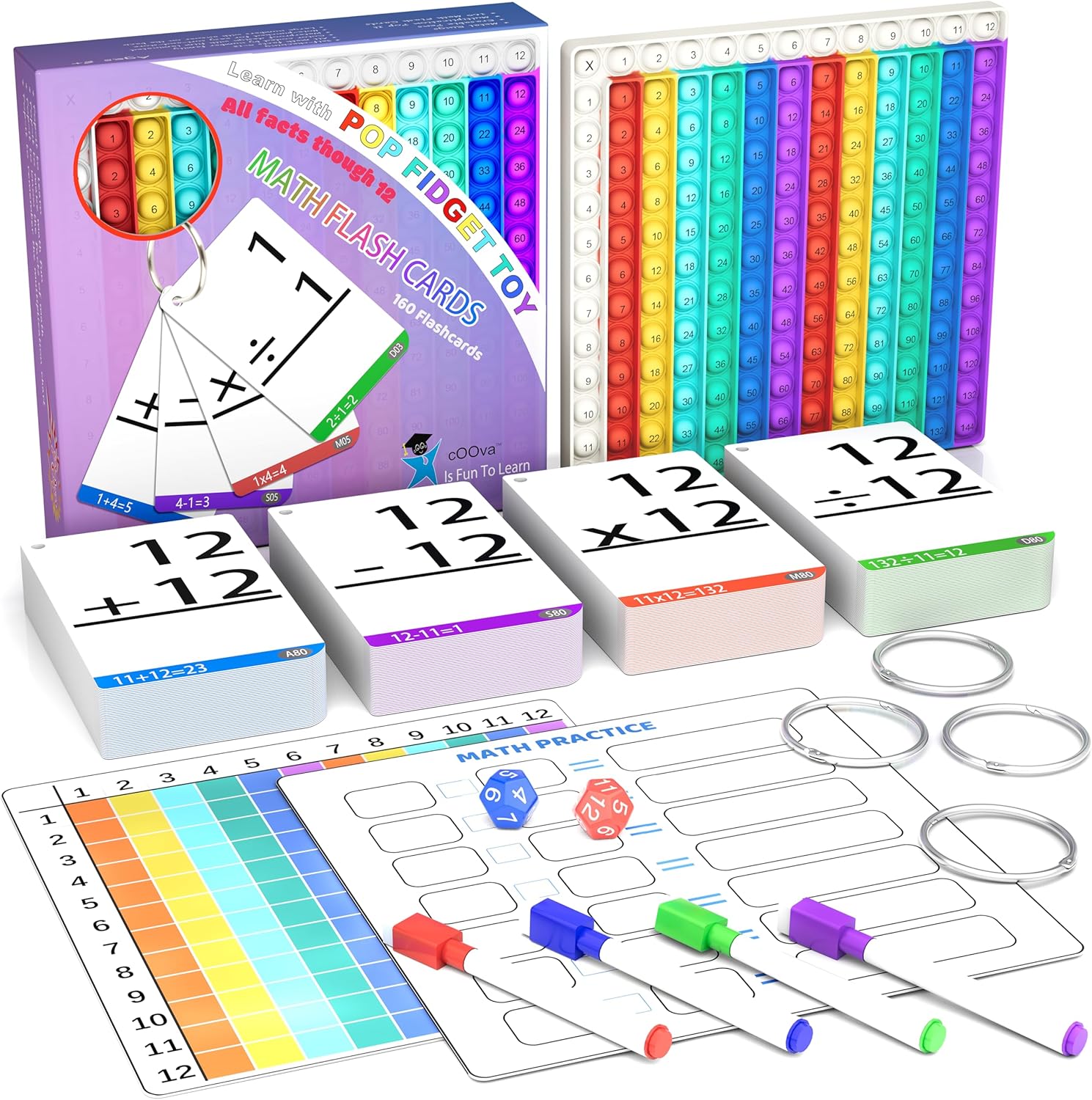
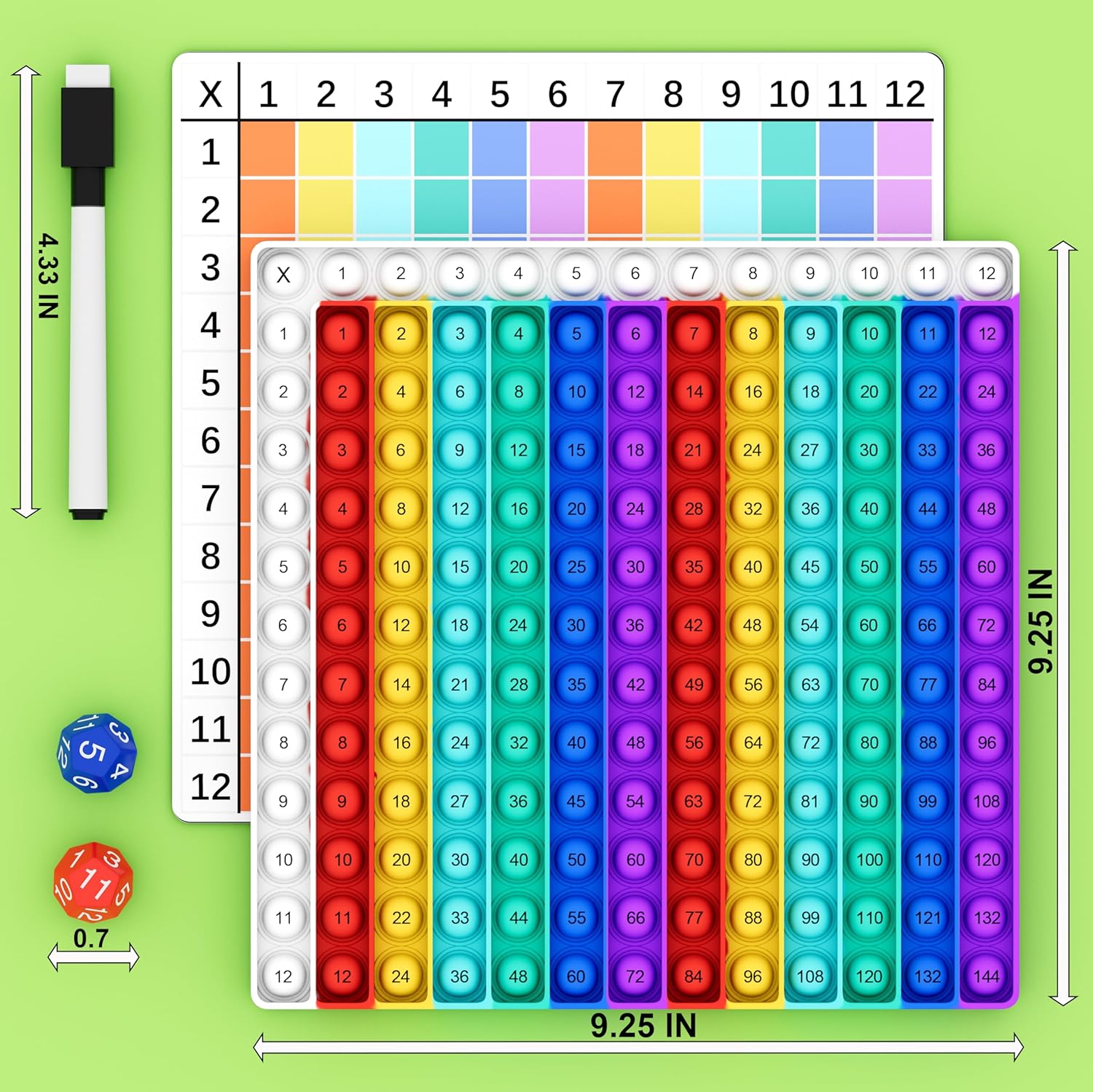
You’ll get a mix of flash cards covering addition, subtraction, multiplication, and division, plus at least one pop-it math board and portable tools to use on the go. The combination makes it easy to shift between quick fact drills and more interactive, game-style practice. The physical format means it’s ready for school or home.
Who it’s for
This package is designed primarily for children in kindergarten through early elementary (ages 4–8), but you can adapt the activities for higher grades if you’re working on multiplication or basic division. You’ll find it useful whether your child is just learning number sense or needs extra practice with math facts.
Unboxing and First Impressions
You’ll notice the set is compact and easy to handle right out of the box. The materials are bright and child-friendly, and the pop-it element immediately invites hands-on interaction. Flash cards are sized for small hands, and the pop-it is lightweight enough that you can take it in a backpack or store it in a classroom supply box.
Packaging and presentation
The product arrives neatly packaged with the cards and pop-it accessible right away. You’ll appreciate that everything seems ready for immediate use, meaning your first session can start within minutes of opening the box. There’s a clear focus on convenience.
Initial setup and ease of use
You won’t need extra supplies to get started—just shuffle the cards and pick a pop-it activity. If you’re using it with a group, you can quickly hand out cards or rotate the pop-it between learners. The simplicity helps you get into practice sessions without a complicated setup.

Key Features Breakdown
This section outlines the standout elements so you know exactly what to expect. You’ll see how the set balances tactile and visual learning to help make math facts stick.
Interactive components
The main interactive piece is the pop-it device, which lets your child press bubbles to count, answer problems, or play turn-based games. Flash cards provide focused problem practice while the pop-it provides a sensory reinforcement that can help memory.
Curriculum coverage
You’ll find problems across the four core operations: addition, subtraction, multiplication, and division. Cards are arranged in a way that supports progression from simple sums to basic multiplication tables and introductory division. This structure works well for both review and targeted practice.
Portability and durability
The pop-it and cards are made for everyday handling. You can slip the set into a backpack or a classroom supply bin without worrying about fragile parts. This portability means you can practice in the car, at a park, or during a classroom center rotation.
Detailed Specification Table
You’ll find this quick reference useful for comparing features at a glance.
| Feature | Description |
|---|---|
| Product Name | Math Games for Kids – Flash Cards for Kids – Pop it Practice with Addition, Subtraction, Multiplication & Division – Ideal for Math Learning and Skill Building. |
| Target Ages | Primarily 4–8 years (kindergarten to 4th grade); activities can extend beyond 8 for review or enrichment |
| Operations Covered | Addition, Subtraction, Multiplication, Division |
| Included Items | Flash cards, pop-it board(s), portable accessories |
| Material | Durable plastic pop-it and laminated or thick cardstock flash cards (varies by package) |
| Use Cases | Home practice, classroom centers, travel, tutoring sessions |
| Learning Benefits | Fluency with math facts, tactile reinforcement, engagement, fine motor practice |
| Portability | Lightweight and compact |
| Recommended For | Parents, teachers, homeschoolers, tutors |
| Gift Suitability | Birthdays, back-to-school, classroom rewards |
Learning Benefits and Educational Value
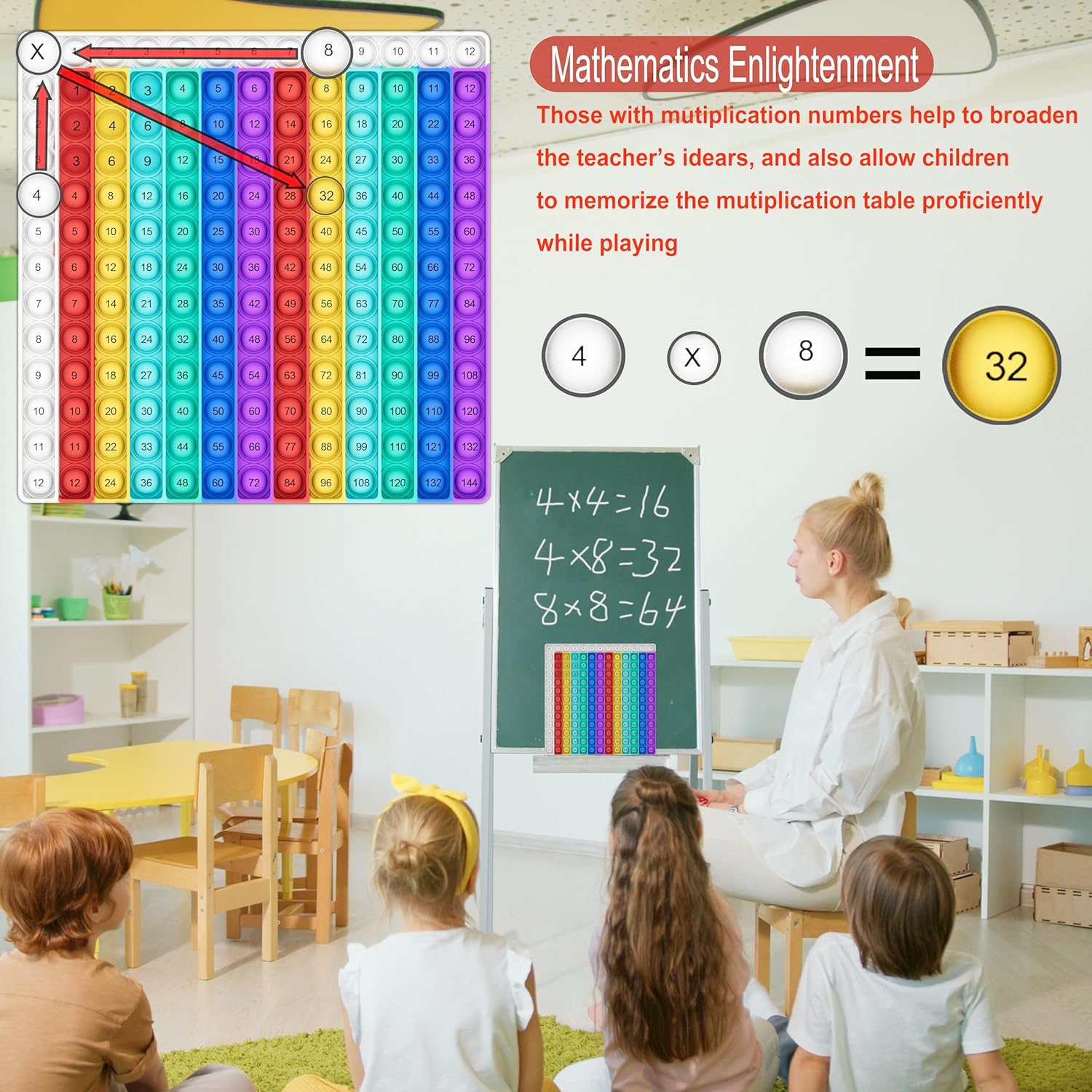
You’ll notice the product mixes play with purpose. The tactile pop-it element helps kinesthetic learners and can reduce math anxiety by making practice feel like a game. Flash cards encourage quick recall, which is crucial for building math fluency.
How it supports number sense
By repeatedly encountering problems in a tactile setting, your child can strengthen number relationships and develop automaticity with math facts. Pressing bubbles for each count creates a multisensory cue that reinforces numeric patterns.
Reinforcing fluency and speed
Flash cards are a proven method for developing fact fluency. You’ll be able to time drills, track improvement, and keep sessions brief yet frequent—exactly what helps build speed and accuracy over time.
Age Range Suitability and Differentiation
You’ll get a product that’s flexible across multiple grade levels. While it’s targeted at ages 4–8, the cards and activities include options to challenge more advanced students or simplify tasks for younger learners.
For preschool and kindergarten
You’ll focus on basic addition and counting activities, using the pop-it to represent objects and practice one-to-one correspondence. Simple visual prompts and small numbers help build early confidence.
For early elementary (grades 1–3)
You’ll use addition and subtraction drills more intensively and introduce basic multiplication facts. Timed flash card rounds are a good way to increase fluency.
For older elementary (grades 3–4+)
You’ll introduce multiplication tables and basic division problems. You can make the tasks competitive or mixed-operation to challenge students who need enrichment.
Gameplay Modes and Activity Ideas
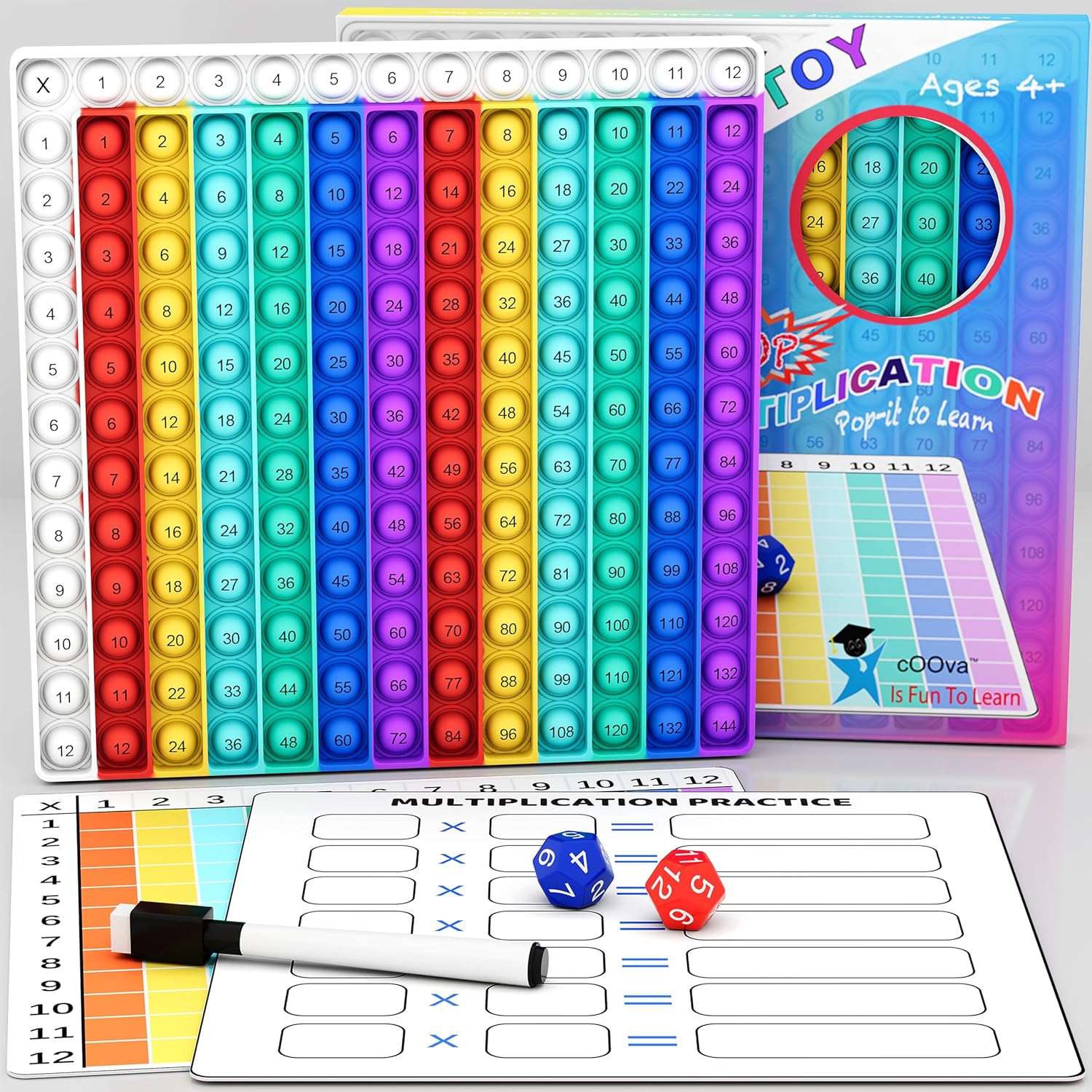
You’ll find multiple ways to use this set, from independent practice to collaborative games. Here are practical and fun ways to keep practice sessions varied and effective.
Solo practice
Have your child pick a card, solve it, and press the corresponding number of bubbles on the pop-it as a self-check. This immediate feedback loop helps correct errors and reinforces correct answers.
Speed drills
You can time a set of flash cards and have your child try to beat their previous score. Use the pop-it to count how many problems they got right for a tactile tally.
Partner games
Two players can take turns flipping cards. The player who answers correctly gets to press a bubble; the first player to pop all bubbles in a row wins. This adds playful competition and keeps engagement high.
Small-group centers
In a classroom, you can rotate small groups through timed flash-card rounds, relay races where students solve a card then pass the pop-it, or cooperative problem-solving where students plan strategies to reach an answer using limited pops.
Sample Activities and Lesson Sequences
You’ll appreciate these ready-to-use sequences that structure practice into short, focused sessions aligned with typical learning objectives.
10-minute starter (number sense)
Begin with 5 simple addition cards. Have your child press a bubble for each addend, then say the sum aloud. Repeat with subtraction, using popped bubbles to show what’s left.
15-minute fluency booster (addition/subtraction)
Mix 20 cards (addition and subtraction). Time the session and have your child aim for fewer errors. Use the pop-it as a reward mechanism—each correct answer gets one pop; a streak of 5 correct answers earns a mini-prize.
20-minute extension (multiplication practice)
Use multiplication cards and ask your child to group the pop-it bubbles into rows representing the factors (e.g., 3 rows of 4). This visual grouping helps build an understanding of multiplication as repeated addition.
25–30-minute mixed review (test prep)
Rotate through cards of all four operations. Keep a tally on the pop-it for each correct answer and then have your child record their totals to monitor progress over weeks.
Flash Card Formats and How to Use Them
You’ll see that flash cards come in various problem formats, which you can use strategically to address different learning goals.
Single-fact cards
These focus on one problem per card—ideal for rapid-fire practice and timed rounds. Use them to build quick recall and confidence.
Fact family sets
Grouping cards by fact families (e.g., 6+2, 8-2, 2×4, 12÷2) helps your child learn the relationship between operations. You’ll encourage deeper understanding by having them connect the related facts.
Themed or leveled packs
You might get separate cards for addition only, subtraction only, etc., or mixed decks labeled by difficulty. You’ll use levels to scaffold learning, starting with easy problems and advancing to the next set when mastery appears.
Durability, Safety, and Materials
You’ll want materials that stand up to frequent handling, and this set generally delivers robust, child-friendly components. The pop-it is flexible and resilient, while cards are thicker than single-use paper.
Cleaning and maintenance
The pop-it is typically washable with mild soap and water; you can wipe cards with a slightly damp cloth if laminated. You’ll want to avoid harsh chemicals that could damage printing or plastics.
Safety considerations
The materials are non-toxic and safe for the target age range, with no small parts that present choking hazards. You’ll still supervise younger children during use to ensure safe handling and prevent chewing on cards.
Comparison with Alternatives
You’ll probably consider digital apps and other physical sets; here’s how this product stacks up.
Physical vs. digital
Physical manipulatives like pop-its give tactile feedback and reduce screen time, which you may prefer for young learners. Digital apps often provide adaptive algorithms and instant scoring, but they lack the hands-on, sensory benefits that support different learning styles.
Flash cards vs. manipulatives-only kits
This set blends both: flash cards provide discrete practice and assessment, while the pop-it adds engagement. Pure manipulatives may be better for conceptual play, but won’t give the same structured problem practice.
Pros and Cons
You’ll want a clear summary before deciding. Here’s what stands out.
Pros
- Engaging tactile feedback that reduces math friction and increases motivation.
- Covers all four operations so you can use it across grade levels.
- Portable and durable for home, travel, or classroom use.
- Easy to use with minimal set-up and no extra materials needed.
- Works well for independent practice, one-on-one tutoring, or group centers.
Cons
- Flash cards may have limited content depth compared to subscription apps that generate endless problems.
- You might eventually need replacement cards or additional pop-its for larger classrooms.
- No built-in progress tracking beyond manual tallying or timing unless you add external recording.
Tips for Parents and Teachers
You’ll get more value if you use the product with intention. These practical tips will help you structure sessions and keep your child motivated.
Keep sessions short and frequent
You’ll see better retention with daily 10–15 minute sessions rather than occasional long drills. Short bursts reduce burnout and maintain a positive association with math.
Use the pop-it as a behavior tool
You can reward correct answers with pops or use the pop-it as a timeout target to calm nerves before tackling a tricky problem. It’s useful for both praise and pacing.
Mix up activity types
You’ll prevent boredom by alternating timed drills, collaborative games, and conceptual grouping tasks. This variety keeps practice fresh and addresses different aspects of fluency and understanding.
Track progress manually
Use a simple notebook or chart to record scores, times, and error patterns. You’ll then use that data to target specific facts that need more practice.
Assessment and Tracking Progress
You’ll need ways to measure growth beyond informal observation. The product supports several low-tech assessment strategies.
Timed rounds and error logs
Time a set of 20 cards and track how many are correct. Log both speed and accuracy to spot trends. After several weeks, compare times and error patterns to measure improvement.
Mastery checklists
Create a checklist of fact families or individual facts. You’ll mark off each fact as your child demonstrates consistent accuracy. This gives a clear roadmap of what remains to be mastered.
Adaptive practice
If your child struggles with certain operations, you’ll pull specific decks for focused practice. Conversely, you’ll skip mastered packs and introduce more challenging cards.
Classroom and Group Use Strategies
You’ll find the set adaptable to small-group or station rotations. It supports cooperative play and independent centers.
Station rotation idea
Set up a pop-it station, a timed flash card station, and a problem-solving station. You’ll rotate groups every 10–15 minutes to keep students moving and engaged.
Peer tutoring format
Pair students so one reads a card and the other answers, switching roles. You’ll cultivate communication skills and reinforce knowledge for both partners.
Competitive tournaments
Organize brief tournaments where students move through levels of difficulty. You’ll encourage healthy competition and provide opportunities for recognition and rewards.
Customization and Extension Ideas
You’ll be able to tailor the product for your specific goals. These adaptations make the set stretch beyond core facts.
Create story problems
Turn flash cards into short story problems related to your child’s interests. You’ll help them apply math to real-life contexts and develop problem-solving skills.
Make math journals
Have your child write or draw solutions to selected cards. You’ll combine tactile practice with written reflection, strengthening conceptual understanding.
Incorporate cross-curricular tasks
Connect math tasks to science or art by using the pop-it for simple graphs or patterns. You’ll integrate learning and highlight math’s relevance across subjects.
Safety, Storage, and Longevity
You’ll want to keep the set usable for a long time. Proper storage and light maintenance will extend its life.
Storage tips
Keep cards in a zip pouch or small box and store the pop-it flat in a drawer or backpack. You’ll prevent bent cards and protect the graphics.
Longevity and replacement
If you’re a teacher or have multiple children, consider adding duplicate sets to maintain availability. You’ll also want to replace worn cards as needed.
Frequently Asked Questions (FAQs)
You’ll likely have a few questions before buying. Here are common concerns and straightforward answers.
Is this suitable for homeschool use?
Yes. You’ll find it ideal for quick daily practice and as part of a structured math block.
Can older students benefit from this set?
Yes. You’ll adapt activities to challenge older students with timed drills, mixed-operation problems, or higher-level multiplication/division tasks.
Does it replace a math curriculum?
No. You’ll use it as a supplemental tool to reinforce facts, practice fluency, and add tactile learning opportunities.
Is the pop-it washable?
Generally yes. You’ll clean it with mild soap and water, and avoid harsh chemicals that can damage the material.
Buying Considerations and Value
You’ll weigh cost against long-term usefulness. This set offers durable components and flexible activities for a reasonable price, making it a practical addition to learning materials.
Cost vs. benefit
If you’re seeking low-tech, effective practice tools that work across settings (home, school, tutoring), you’ll find good value. The tactile element adds motivation that many more expensive tools lack.
Ideal purchase scenarios
You’ll benefit most from this set if your child needs regular fluency practice, if you teach small groups, or if you want a gift that’s both fun and educational.
Final Verdict and Recommendation
You’ll find Math Games for Kids – Flash Cards for Kids – Pop it Practice with Addition, Subtraction, Multiplication & Division – Ideal for Math Learning and Skill Building to be a practical, engaging tool for building math fluency. The combination of tactile pop-it practice and traditional flash cards makes it versatile across age ranges and learning styles.
You’ll get good value if you want a hands-on, portable set for short daily practice sessions, classroom centers, or targeted tutoring. It won’t replace a full curriculum, but it will give you a dependable way to make math practice feel less like work and more like a game—helping your child build skills, confidence, and enjoyment in math.
Disclosure: As an Amazon Associate, I earn from qualifying purchases.