
Have you ever wished math practice felt less like a chore and more like a quick, engaging game your child actually looks forward to?

Product overview: Educational Insights Math Whiz – Electronic Math Games, Addition, Subtraction, Division, and Multiplication Game, Handheld Games for Kids, Interactive STEM Learning Tools for Ages 6+
This handheld device is designed to turn routine arithmetic practice into short, interactive rounds that keep your child engaged. You’ll see why the combination of simple controls and progressive difficulty makes it a popular choice for family use and classroom reinforcement.
What’s included and what it does
The package comes with the Math Whiz handheld game and requires 2 AAA batteries, which are not included. You’ll find three different modes of play, eight difficulty levels per operation, and a compact design that’s easy to carry around.
Who this is for
This product targets children aged 6 and up who are working on addition, subtraction, multiplication, and division. You’ll find it particularly helpful if your child needs extra short-burst practice sessions or if you want a low-screen alternative to tablet apps.
Key features and benefits
Below you’ll find the standout features and how they help your child build math skills. Each point explains a practical advantage so you can see how it fits your learning goals.
Progressive difficulty with 8 levels per skill
The Math Whiz offers 8 difficulty levels for each of the four operations to match your child’s ability and growth. You’ll be able to tailor practice so it remains challenging but not discouraging.
Three play modes to keep practice varied
There are Drill Mode, Challenge Mode, and Calculator Mode, providing different ways to engage with arithmetic. You’ll find variety helps maintain interest and supports different learning styles.
Compact handheld design for portability
The slim design fits in a backpack or purse and is great for travel or waiting rooms. You’ll appreciate having a non-screen, battery-powered activity that’s ready anywhere.
Multi-grade versatility
Because of the adjustable levels, the game grows with your child from basic facts through more complex problems. You’ll be able to use the device across multiple school years or with siblings of different skill levels.
Low tech, high engagement
This device doesn’t require Wi-Fi, apps, or updates, which keeps focus on learning and avoids distractions. You’ll like that it’s simple to operate and doesn’t rely on a stable internet connection.
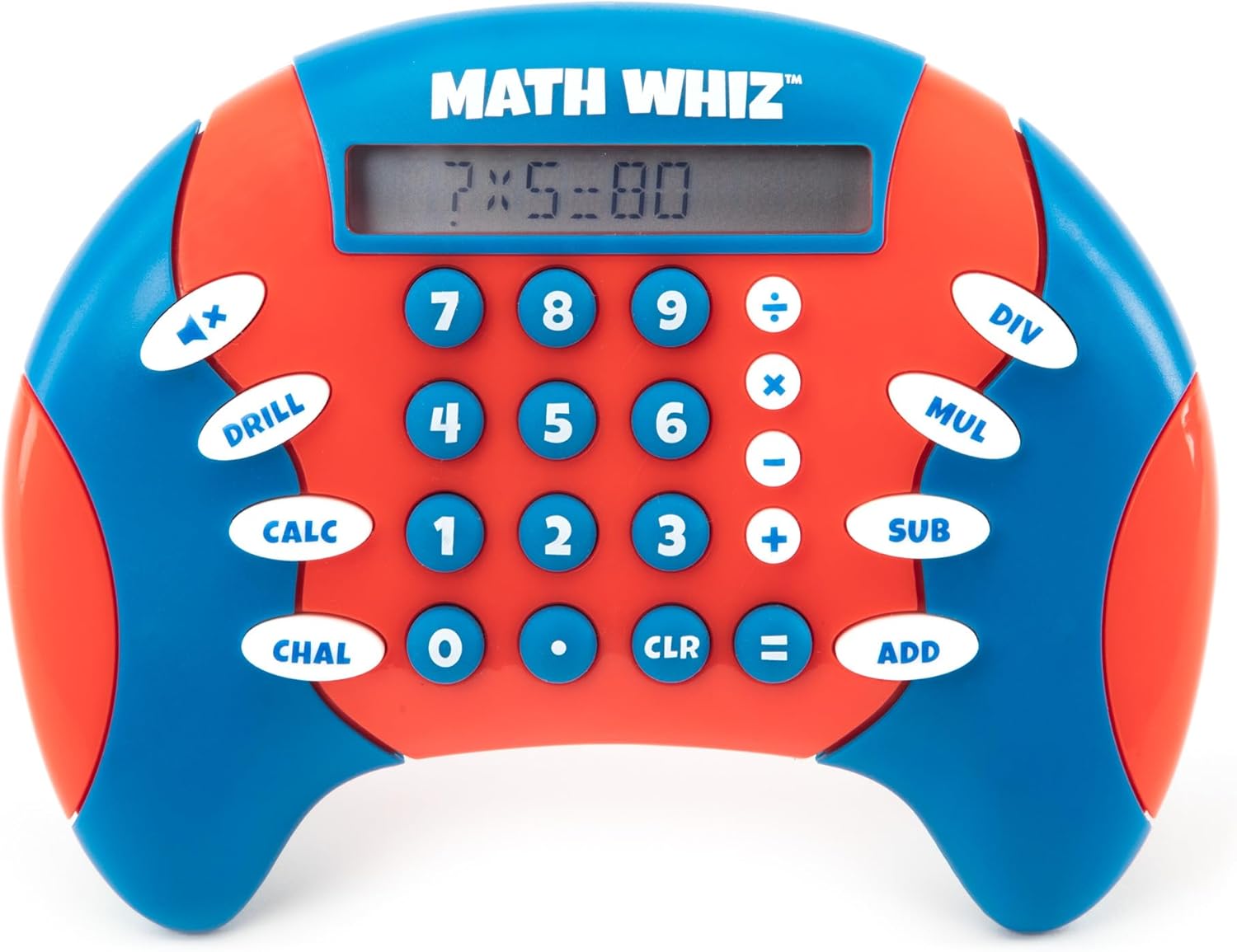

Quick specs and technical details
Here you’ll find a concise list of the most relevant technical and package details so you know exactly what to expect when you shop.
- Product: Educational Insights Math Whiz – Electronic Math Games, Addition, Subtraction, Division, and Multiplication Game, Handheld Games for Kids, Interactive STEM Learning Tools for Ages 6+
- Modes: Drill Mode, Challenge Mode, Calculator Mode
- Levels: 8 difficulty levels for each operation
- Power: 2 AAA batteries (not included)
- Target Age: 6+
- Dimensions: compact, handheld
- Use: Home and classroom
Comparison table for easy reference
This table breaks down the main aspects of the product so you can quickly scan what it offers, who it’s for, and any limitations to consider.
| Category | Details | What it means for you |
|---|---|---|
| Modes of Play | Drill, Challenge, Calculator | Variety keeps practice engaging and supports different learning approaches |
| Difficulty Levels | 8 per operation | Adjustable progression for growing skills |
| Operations Covered | Addition, Subtraction, Multiplication, Division | Covers the four basic arithmetic operations commonly taught in early grades |
| Power Source | 2 AAA batteries (not included) | Portable but requires battery replacement over time |
| Age Range | 6+ | Suitable for early elementary through basic upper-elementary practice |
| Portability | Handheld, compact | Easy to take on trips, in-car practice, or classroom use |
| Tech Requirement | None (offline) | No apps, updates, or internet needed |
| Best Use | Practice and reinforcement | Good for short practice sessions and supplementary learning |
| Limitations | No visual rewards beyond scoring; minimal sound and lights | More minimal than game-based apps but reduces screen time and distractions |
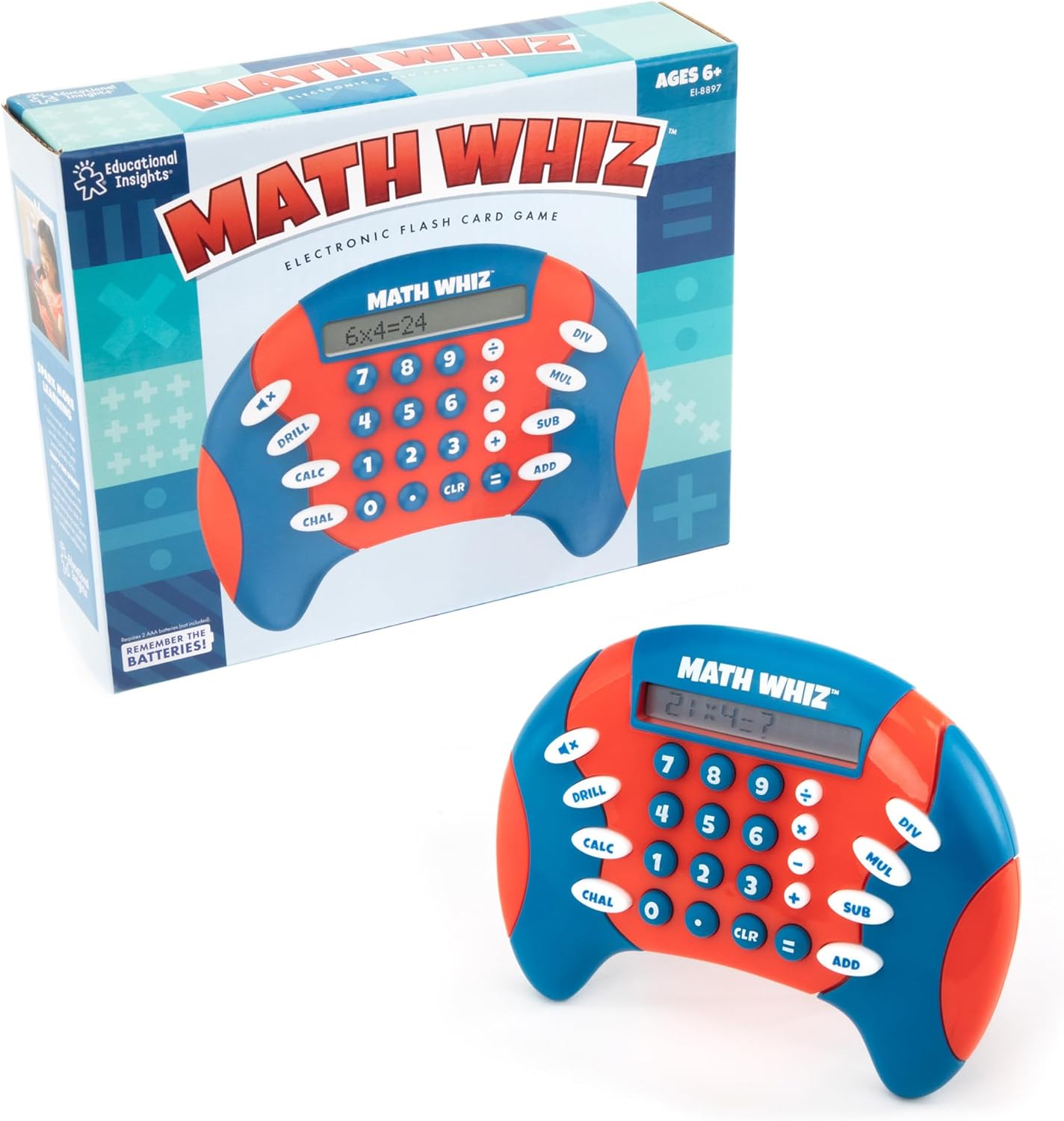
Drill Mode: steady, progressive practice
Drill Mode is structured to present a sequence of problems that gets progressively harder as the round continues. You’ll find this mode great for timed fact practice and for building fluency in a focused way.
How Drill Mode supports mastery
This mode helps you reinforce automatic recall by repeating and slightly ramping up complexity. You’ll notice improved speed and confidence when your child practices regularly with Drill Mode.
Tips for using Drill Mode effectively
Set short goals, like five rounds per sitting, to prevent fatigue and keep practice positive. You’ll boost motivation by combining Drill Mode with small rewards, praise, or a tracking chart.
Challenge Mode: strategic number elimination
Challenge Mode turns arithmetic into a numbers elimination game where correct answers remove numbers or targets. You’ll see that this mode adds a puzzle-like element that can feel more competitive and fun.
Why Challenge Mode may boost engagement
By adding a goal beyond single-problem solving, Challenge Mode keeps your child focused on both accuracy and strategy. You’ll find children often respond well to the mini-game format because it feels more like play.
When to use Challenge Mode
Use this mode when your child needs a break from pure repetition but still needs practice. You’ll often get better engagement from kids who prefer game-like challenges.
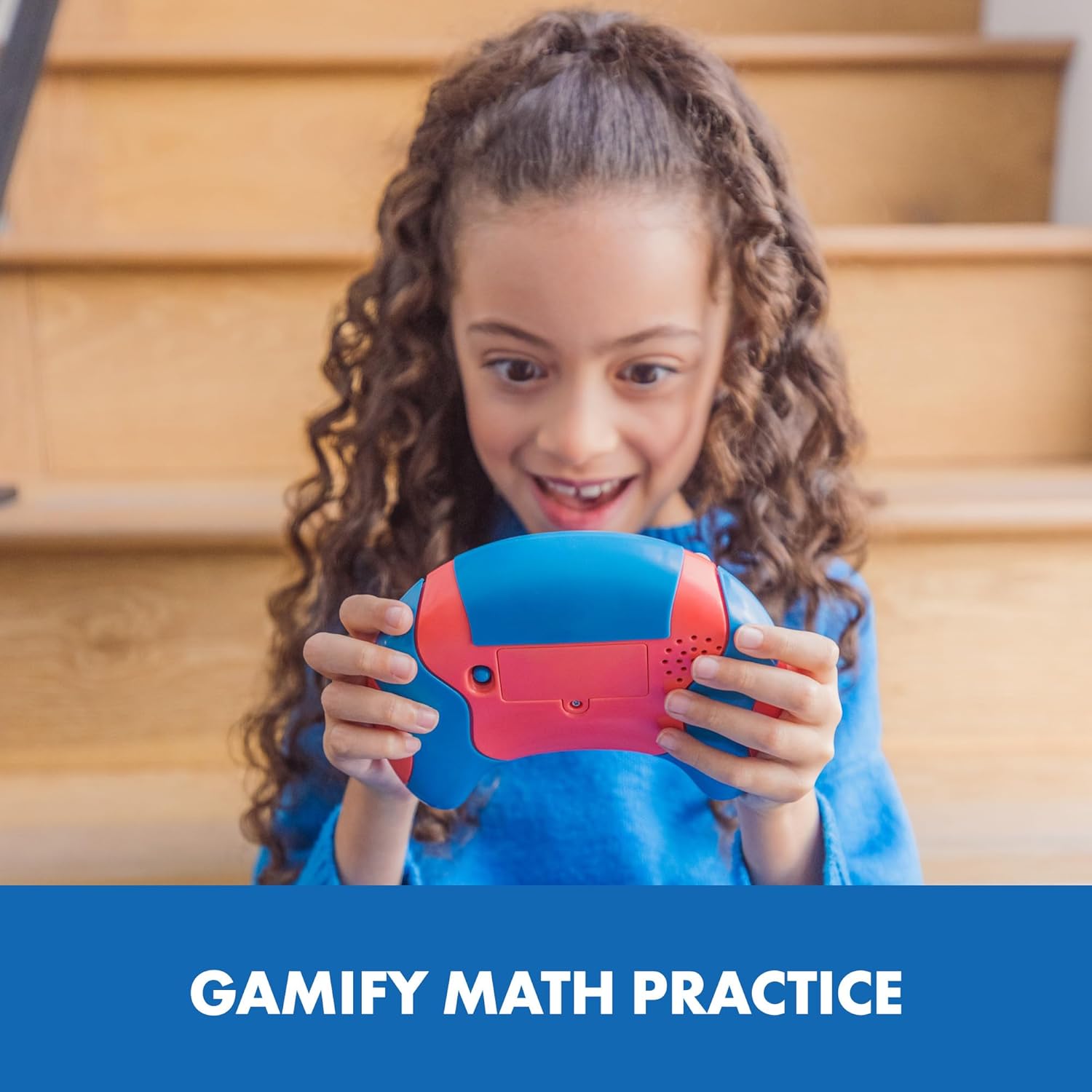
Calculator Mode: checking work and experimenting
Calculator Mode lets your child enter answers without game pressure, which is handy for checking manual work or experimenting with number relationships. You’ll find this mode useful for moments when accuracy and reflection are the aim rather than speed.
How Calculator Mode supports learning
This mode reinforces the relationship between inputs and outputs, helping your child test hypotheses and check homework. You’ll be able to encourage number sense by having them predict answers then verify on the device.
Best practices for Calculator Mode
Encourage your child to explain why their answer matches or differs from the calculator output. You’ll deepen understanding when practice pairs with verbal explanation.
Setup and first use
Setting up the Math Whiz is straightforward and takes only a couple minutes. You’ll appreciate how little fuss there is: insert batteries, choose a mode and level, and start playing.
Battery installation and power tips
You’ll need two AAA batteries (not included) to start. Keep spare batteries handy if you travel frequently with the device, and consider rechargeable AAA batteries for a more sustainable option.
Navigating controls and buttons
The controls are intentionally simple so your child can operate the device independently. You’ll find that even younger kids can press buttons and switch modes after a brief demonstration.

Durability and build quality
The handheld is designed for kids with a sturdy, compact plastic shell that withstands normal drops and bumps. You’ll still want to treat it gently, but it’s built for everyday use and travel.
What to expect from normal wear and tear
Expect scuffs or minor scratches over time, especially if used in backpacks or on-the-go. You’ll notice that buttons remain responsive through months of use, but prolonged battery leaks can damage internal components, so remove batteries during long storage periods.
Cleaning and maintenance
A soft, dry cloth works well for routine cleaning and a slightly damp cloth for sticky messes. You’ll avoid harsh cleaners or submerging the device to keep it functioning.
Educational value and learning outcomes
The main educational purpose is to build speed, accuracy, and confidence with basic arithmetic. You’ll see measurable improvement in mental math as your child practices with purpose and consistency.
Cognitive skills supported
Practicing with Math Whiz helps you strengthen number sense, working memory for math facts, and attention to detail. You’ll also notice better problem-solving stamina as your child grows comfortable with more challenging levels.
Alignment with classroom learning
The operations and difficulty progression align well with typical elementary curricula, so you can use the device to reinforce classroom lessons. You’ll find it complements homework and in-class practice rather than replacing formal instruction.

Age appropriateness and grade recommendations
Designed for ages 6 and up, the device fits early elementary grades where foundations in addition and subtraction are formed. You’ll be able to stretch its usefulness into upper elementary with multiplication and division practice.
Which grades will benefit most
Grades 1–3 will get strong benefits from addition and subtraction modes, while grades 3–5 will use multiplication and division more often. You’ll get more mileage by adjusting difficulty levels to suit your child’s current skill set.
Adapting for older or younger kids
You can scale challenge up or down using the 8 difficulty levels, and for younger kids you may model problem solving or help set the device to easier levels. You’ll be surprised how older kids still enjoy beating their previous scores.
Pros and cons — what you’ll like and what to consider
Here’s an honest breakdown to help you decide if this product fits your needs and routines.
Pros
- Portable and simple to use; you’ll be able to take it anywhere.
- Three modes keep practice varied and interesting.
- Eight difficulty levels per operation support long-term growth.
- No screen time or internet required, reducing distractions.
- Affordable and reasonable gift option for birthdays or holidays.
Cons
- Requires AAA batteries (not included), which you’ll need to replace occasionally.
- Limited visual or sound rewards compared to mobile apps; you’ll need to add your own motivation techniques.
- Not a full math curriculum; it’s best used for targeted practice rather than full instruction.
Practical tips to get the most out of Math Whiz
Small routines will help you turn the device into a consistent learning tool that your child actually enjoys using. These tips focus on habit-building and motivation.
Establish short, regular sessions
Aim for short bursts of 5–10 minutes a day to build long-term fluency without fatigue. You’ll find regular, short practice beats occasional long sessions.
Use it for warm-ups and transitions
Let the device be a warm-up before homework or a quiet activity during transitional times. You’ll transform idle minutes into useful practice without pressure.
Create a reward chart
Track progress with stickers or a star chart tied to small rewards. You’ll boost motivation by celebrating incremental improvements.
Mix modes for variety
Alternate Drill, Challenge, and Calculator modes across practice days to keep interest high. You’ll prevent burnout and cover different types of learning engagement.
Classroom and group use ideas
Math Whiz isn’t just for individual use; you can incorporate it into small-group stations or classroom centers. You’ll get creative use cases that make the device a handy tool for teachers.
Station rotation model
Use the device as one of several stations: one station for flash cards, one for a workbook, and one for Math Whiz. You’ll manage classroom time efficiently and keep students engaged in different ways.
Timed fact challenges
Set up friendly competitions where students compare fastest accurate times or highest scores across a week. You’ll foster a positive, collaborative atmosphere around math facts.
Assessment tool for quick checks
Teachers can use it for quick formative checks on fluency without formal testing. You’ll get immediate feedback to inform small-group instruction.
Giftability and occasions
This product makes a practical and thoughtful gift for kids who like hands-on games or need extra math practice. You’ll find it a good choice for birthdays, holidays, or back-to-school gifts.
Why it makes a good gift
It’s compact, affordable, and educational—parents often appreciate gifts that combine learning with low-tech fun. You’ll be giving something kids can enjoy independently or with siblings.
Presentation ideas
Pair the device with a small notebook for tracking scores, a set of spare batteries, or a simple reward chart. You’ll increase the gift’s perceived value and encourage consistent use.
Alternatives to consider
If you’re weighing options, you might compare Math Whiz to apps, tablet games, or other handheld devices. You’ll want to balance screen time concerns, portability, and features when choosing.
App-based alternatives
Apps may offer richer graphics, adaptive learning, and detailed progress reports, but they require a tablet and internet at times. You’ll trade simplicity and portability of Math Whiz for more sophisticated tracking and entertainment.
Other handheld games
Other educational handhelds can include more subjects or additional mini-games, but may be pricier or more fragile. You’ll evaluate based on durability, content breadth, and price.
Flash cards and printed workbooks
Classic tools are inexpensive and tactile but may lack the instant feedback that Math Whiz provides. You’ll often combine these with the device for mixed practice formats.
Safety considerations
The device is generally safe for the recommended age group, but small parts and batteries warrant attention. You’ll want to follow basic safety steps to keep usage trouble-free.
Battery safety
Keep batteries out of reach of younger children and avoid mixing old and new batteries. You’ll prevent leakage and potential damage by removing batteries during long storage periods.
Small parts and choking
While the device itself is solid, packaging may contain small items like instruction leaflets. You’ll ensure younger siblings don’t access any loose or small components.
Troubleshooting and common issues
Most problems are simple to fix and involve power or button issues. You’ll be able to resolve common hiccups quickly and get back to practicing.
Device won’t turn on
Check battery orientation and ensure batteries are fresh or charged. You’ll also clean battery contacts if necessary to restore power.
Buttons are unresponsive
Dirt or sticky residue can affect button responsiveness; gently clean the surface and avoid excessive liquid. You’ll also try reinserting batteries to reset internal circuits.
Incorrect scoring or frozen screen
Remove and reinsert batteries to perform a soft reset. You’ll restore normal function in most cases without technical support.
Frequently asked questions (FAQ)
These are questions you’ll likely have before buying and while using the product, answered clearly so you can make a confident decision.
Can multiple children use the device?
Yes, it can be shared, though you may want a scoring notebook to track individual progress. You’ll ensure each child has a fair chance by rotating turns and keeping score.
Are batteries included?
No, the product requires 2 AAA batteries which are not included. You’ll want to buy batteries or use rechargeables for immediate use.
Is there parental control or data tracking?
No, it’s an offline device with no account or tracking features. You’ll manually track progress and tailor practice sessions using external charts.
How long will the batteries last?
Battery life depends on frequency of use and battery type, but moderate use typically lasts several weeks to months on disposable batteries. You’ll save money in the long run with rechargeable AAA batteries.
Does it teach strategies or just give answers?
Math Whiz primarily builds fluency and accuracy through practice; it doesn’t provide step-by-step conceptual teaching. You’ll supplement it with instruction and explanation as needed.
Final verdict and buying recommendation
If your goal is to give your child short, focused practice sessions without screens and with adjustable difficulty, the Educational Insights Math Whiz handheld game is a strong, practical choice. You’ll get portability, varied modes, and adjustable difficulty that support steady improvement in arithmetic facts.
Who should buy this
Buy this if you want a low-tech, engaging math practice tool for kids aged 6 and up. You’ll appreciate it for travel, classroom centers, or daily warm-up practice.
Who might prefer something else
Consider other options if you need adaptive lesson plans, detailed progress tracking, or a full curriculum replacement. You’ll find apps or subscription services better if those are your priorities.
Final tips for long-term success
Small habits make a big difference when using any practice tool. You’ll maximize the Math Whiz’s value by making practice predictable, enjoyable, and part of a balanced learning routine.
- Keep sessions short and consistent.
- Rotate modes and difficulty to avoid boredom.
- Use external rewards or a progress chart to sustain motivation.
- Pair device practice with explanation and reflection for deeper learning.
If you follow these tips, you’ll likely see steady gains in accuracy and speed, and your child may even start to look forward to math practice.
Disclosure: As an Amazon Associate, I earn from qualifying purchases.