Looking for a fun, screen-free way to boost your child’s confidence with numbers?
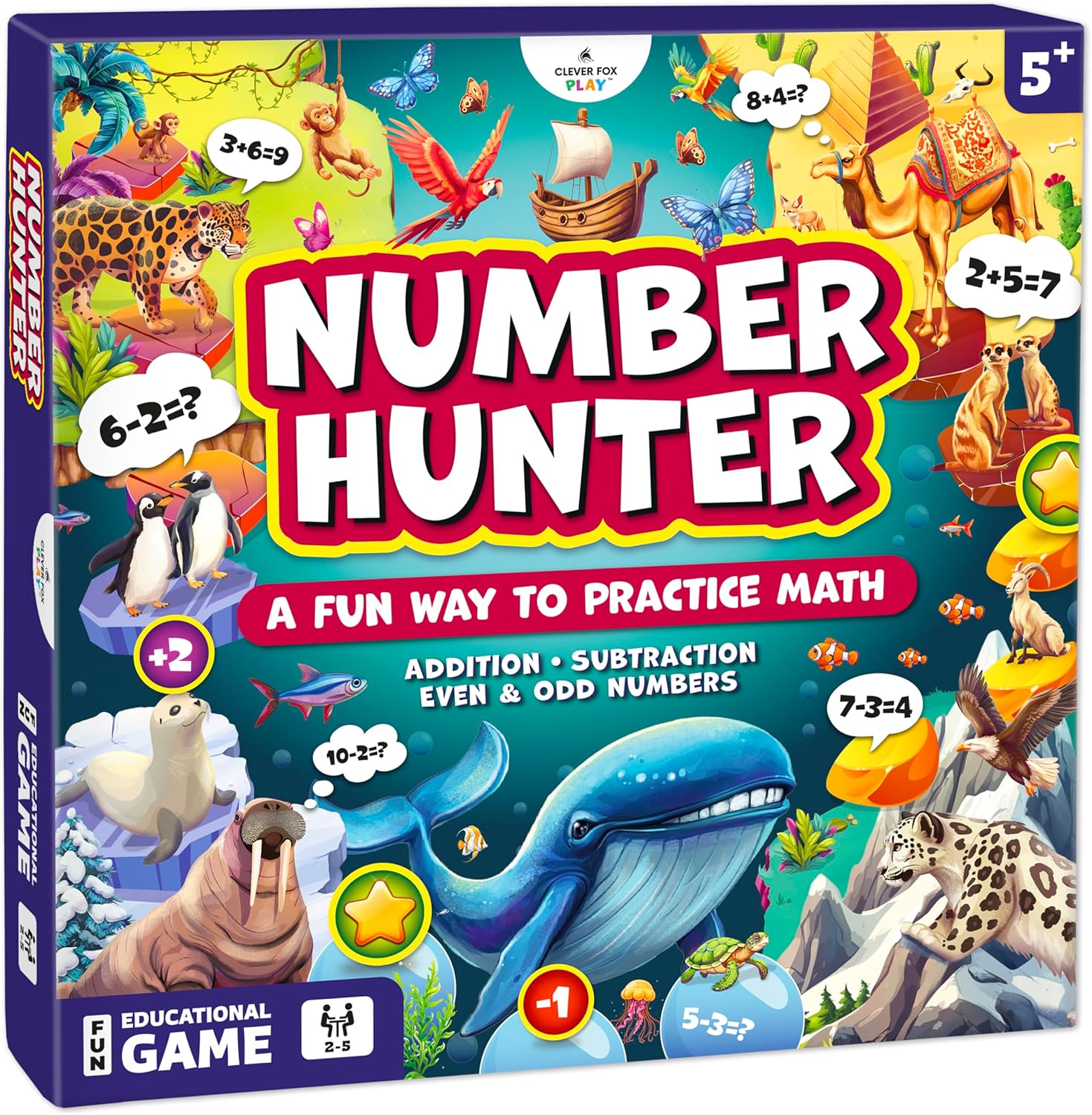

First Impression
When you pick up the Number Hunter Math Board Game – Addition & Subtraction Adventure for Kids Ages 4-8 – Fun Educational STEM Game for Kindergarten, 1st-3rd Grade, Homeschool & Family Game Night, you’ll notice it’s designed to feel approachable and friendly for young learners. The box art is colorful without being overwhelming, and you’ll immediately get the sense that this is a family-focused game you can bring out again and again.
You’ll appreciate that the product clearly targets core early math skills and frames them as part of a playful race or quest, which makes it easier for kids to stay motivated. The components look durable and the rules seem simple enough that you won’t need lengthy prep time before play.
What the Game Is
Number Hunter is an educational board game that turns addition and subtraction practice into a playful challenge. You’ll find that it’s aimed at children roughly ages 4 to 8, covering preschool, kindergarten, and early elementary skills.
You’ll be moving tokens, rolling dice, and solving math prompts while competing or cooperating with other players. The goal is to reinforce number recognition and basic arithmetic through repeated, low-pressure play rather than through worksheets or flashcards.
Components and Quality
The game typically includes a game board, numbered cards or tiles, dice, player tokens, and a rule booklet; some editions may also include bonus challenge cards or stickers. You’ll notice the pieces are designed for frequent handling by small hands.
Most components are made from child-safe, non-toxic materials and seem to be constructed to withstand repeated family use. The board surface and cards generally feel robust enough for homeschool or classroom settings, though you may want to store them carefully to extend their life.
| Attribute | Details |
|---|---|
| Target Age | 4–8 years (pre-K to Grade 3) |
| Players | 2–4 (or more with rule variations) |
| Average Playtime | 15–30 minutes per game |
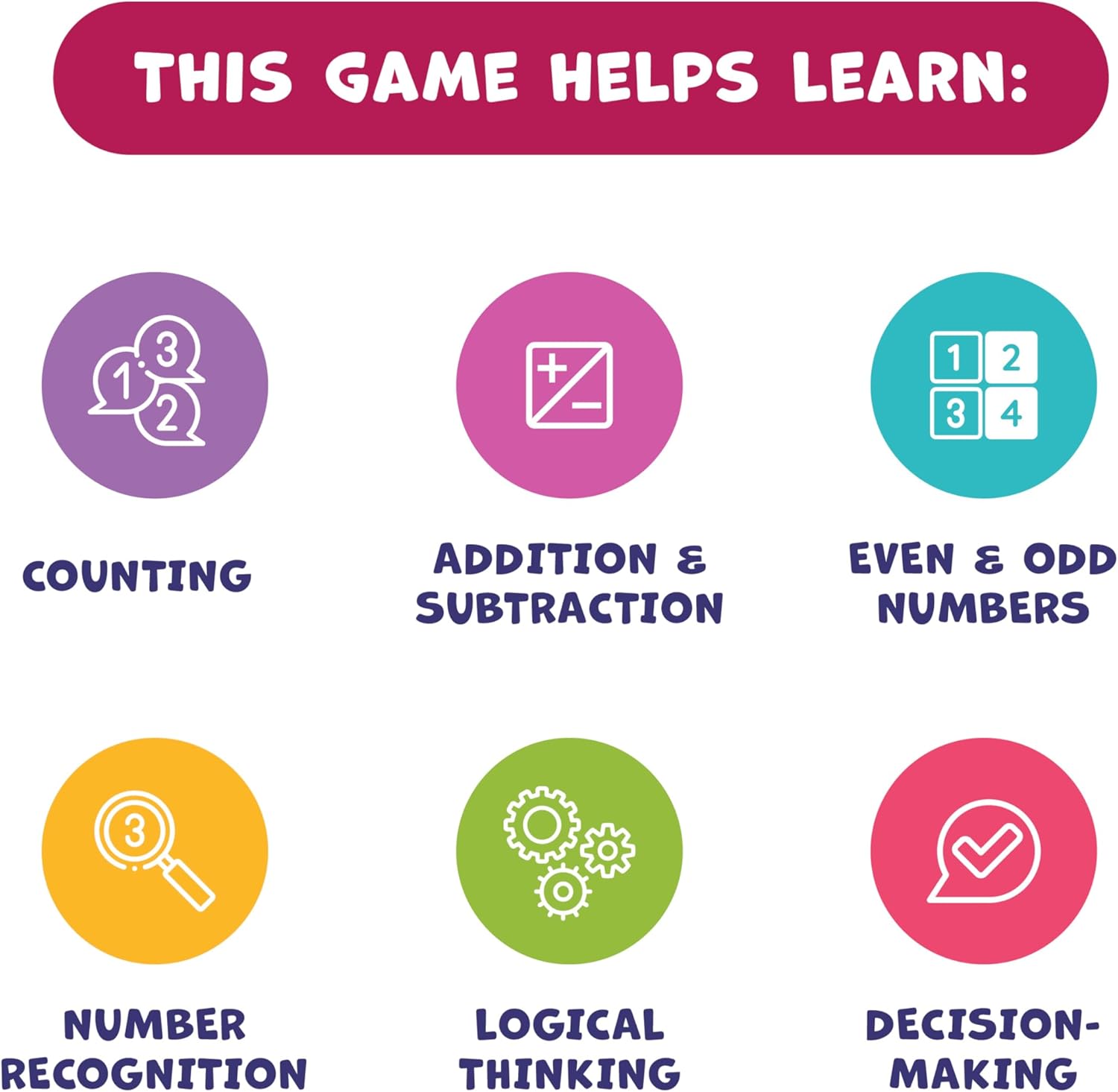
| Key Skills Targeted | Addition, subtraction, number recognition, counting |
| Materials | Sturdy cardboard board, laminated cards (varies), plastic tokens, dice |
| Safety | Non-toxic materials, kid-safe edges |
| Setup Time | 2–5 minutes |
| Replayability | High (multiple modes and difficulty levels) |
| Best For | Homeschool, classroom practice, family game night, birthday gift |

How to Play
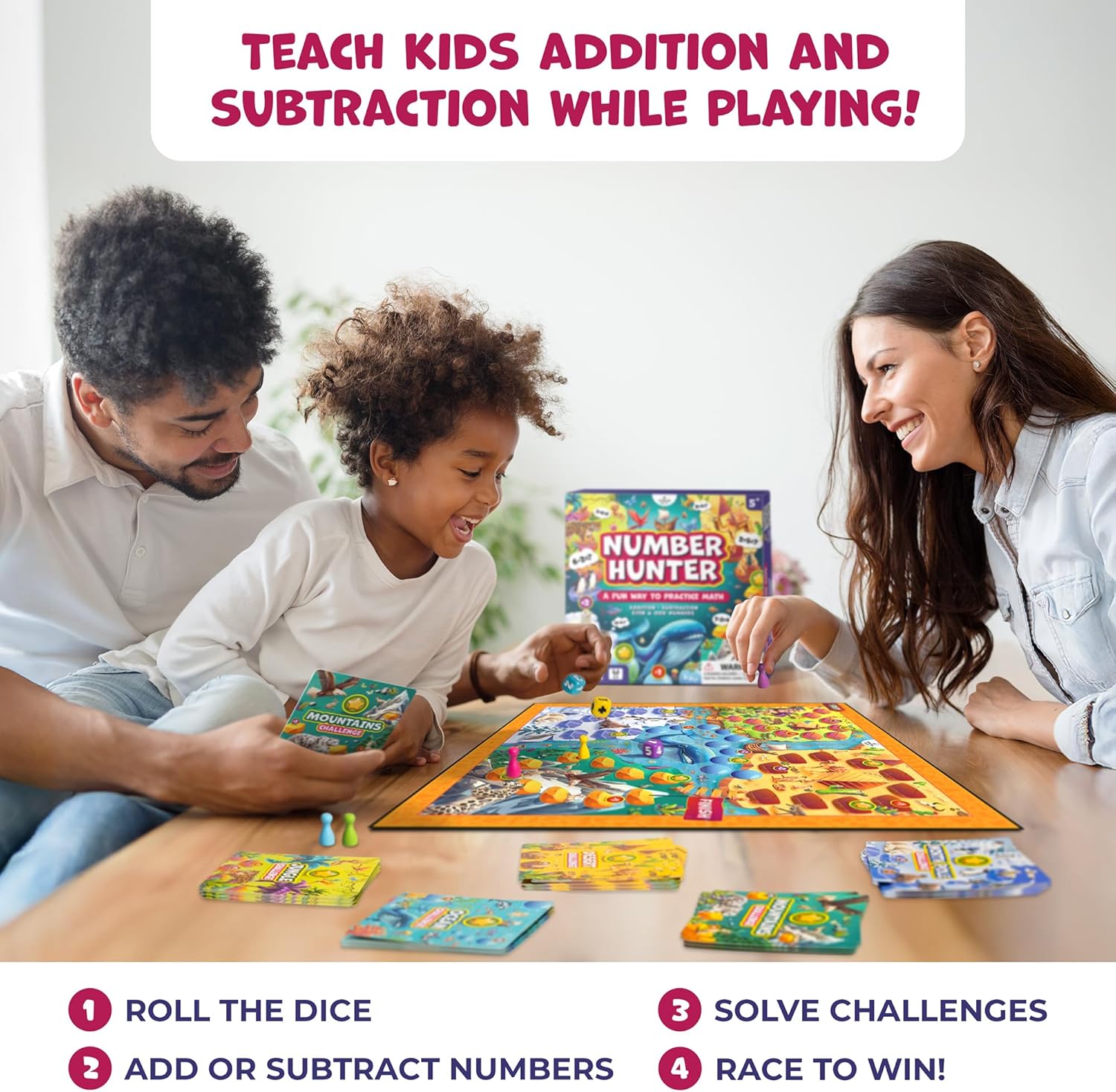
You’ll set up the board, choose tokens, and take turns rolling the dice and drawing cards or answering math problems that determine how far you move. The player who reaches the finish line or accumulates the correct number of successful answers first wins.
The game mechanics are straightforward: kids roll, calculate, and move. You’ll be able to guide your child through the early rounds, then gradually step back to let them work independently as their confidence grows.
Game Modes and Variations
Number Hunter often includes different levels of difficulty or alternate modes to tailor gameplay to your child’s current skill set. You can switch between simple number recognition and more complex addition/subtraction problems depending on the player’s grade level.
You’ll also be able to play competitively — racing to the finish — or cooperatively, where players combine efforts to solve problems and reach a shared goal. This variety helps keep the game fresh and gives you options for different teaching moments.
Educational Benefits
This game turns short, low-stress practice sessions into meaningful learning opportunities that reinforce classroom lessons. You’ll see kids practicing math without it feeling like a chore, which improves their attitude toward the subject over time.
Number Hunter supports mastery through repetition and instant feedback, both critical for early arithmetic fluency. You’ll be helping your child build number sense, learn operational patterns, and develop mental math strategies that will serve them long-term.
Math Skills You’ll See Improve
You’ll notice improvements in counting, one-to-one correspondence, addition and subtraction fact recall, and number sequencing. These foundational skills are essential for later topics like place value and basic multiplication.
Because problems are presented in short, game-based bursts, you’ll help your child practice automaticity — the ability to recall basic facts quickly — which reduces cognitive load during more complex problem-solving tasks in school.
Developmental and Soft Skills
Beyond math, you’ll see gains in attention span, turn-taking, and rule-following. Playing a board game helps kids negotiate social situations, manage small frustrations, and celebrate small wins.
You’ll also be nurturing critical thinking and perseverance. When a player gets a problem wrong, the low-stakes environment allows them to try again without fear, building resilience and a growth mindset toward learning.
Age Range and Skill Levels
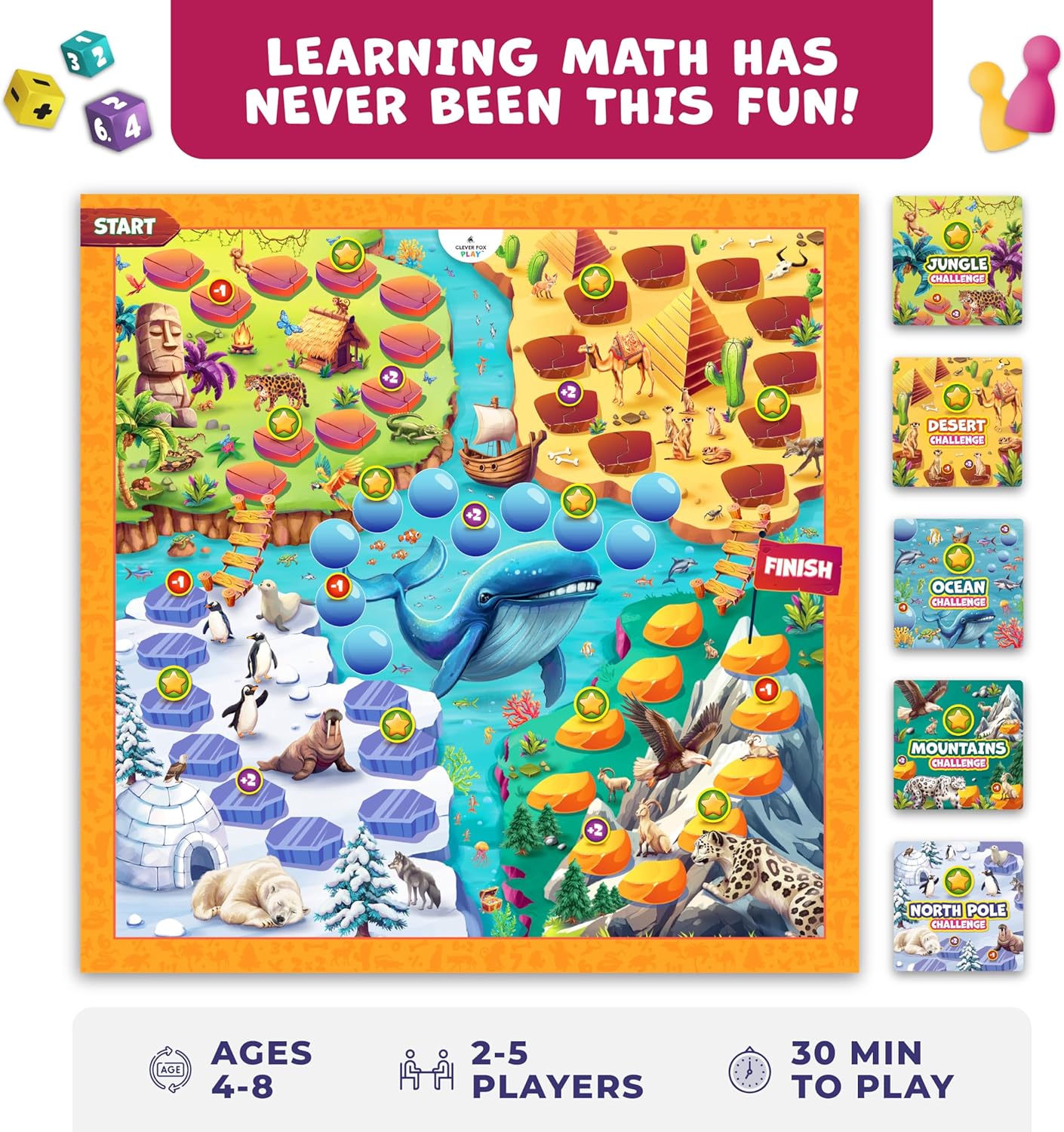
Number Hunter is flexible enough to grow with your child from preschool counting games up to more complex addition and subtraction problems for early elementary students. You’ll be able to adjust the challenge level easily.
If your child is on the younger end, you’ll focus on counting and number recognition. With slightly older children, you’ll shift to two-digit operations and mental arithmetic practice. The game’s adaptability makes it useful across several grade levels.
Using It in Homeschool and Classroom
You’ll find this game particularly useful for short math centers, morning routines, or transition activities in a classroom. It’s small enough to store easily and robust enough for repeated use in group settings.
In a homeschool environment, you’ll use the game for targeted practice or as a quick formative assessment tool to gauge where your child needs more help. Because it’s entertaining, you’ll often get more voluntary practice out of kids than you would from traditional drills.
Durability and Safety
The materials are generally child-safe and designed to hold up to regular handling by small children. You’ll notice rounded corners and non-toxic inks in most versions, which makes it safer than many DIY learning tools.
To maximize longevity, you’ll want to keep cards out of moisture and store small pieces in a separate bag or box. With reasonable care, this should last for multiple years and multiple children.
Materials and Cleaning
The board is usually cardboard with a glossy or matte finish, and tokens are plastic. You’ll be able to wipe the board gently with a damp cloth and keep cards in a resealable bag to protect them from spills.
If tokens get dirty, you’ll clean them with mild soap and water. Avoid submerging the board in liquid; instead, use a damp cloth and allow it to air dry to maintain the integrity of the printed surface.
Setup and Storage
You’ll spend very little time setting up the game — generally just laying out the board, choosing tokens, and shuffling cards. That quick setup is one of the reasons you’ll find yourself reaching for this game between other activities.
For storage, you’ll want to keep the cards stacked and tokens in a small pouch inside the box. If you’re using it in a classroom, consider labeling a small container to ensure all pieces return to the correct set at the end of each session.
Playtime and Replayability
An average round lasts between 15 and 30 minutes, which is long enough to practice several math facts but short enough to hold a young child’s attention. You’ll find that this length fits well into homeschool schedules and family game nights.
Replayability is high because you can change problem difficulty, vary player roles, and introduce friendly competitive or cooperative elements. The variety of cards and the chance factor from dice rolls keep outcomes fresh and surprising.
Pros and Cons
You’ll find a clear list of strengths and limitations helpful when deciding if this is the right purchase for your household.
Pros:
- You’ll get an engaging, low-stress way to practice addition and subtraction that kids actually enjoy.
- The game is screen-free and portable, useful for travel, classrooms, or living-room math sessions.
- It offers multiple difficulty levels and play modes, so it grows with your child.
- Components are child-safe and generally durable for repeated use.
Cons:
- You’ll need to store small pieces carefully to avoid losing cards or tokens.
- Advanced students may find the highest difficulty levels too basic after a while.
- The quality of components can vary by batch or manufacturer; you may want to check for sturdier versions if you expect heavy classroom use.
Value for Money
When you look at the cost relative to how often you’ll use it and the range of skills it covers, you’ll likely find good value in this purchase. You’ll benefit not just from short-term fun but from consistent reinforcement of important math concepts.
If you use it regularly in homeschool lessons or as a classroom center, the cost per minute of educational engagement drops quickly. You’ll also save time planning alternative activities because this game doubles as both instruction and practice.
Who Should Buy It
You should consider this game if you’re a parent, grandparent, or educator who wants a practical, playful tool to support early math development. It’s especially useful if your child resists traditional worksheets or you prefer hands-on learning.
You’ll also find this is a thoughtful gift for birthdays or holidays, particularly for families who value educational toys. If you teach kindergarten through third grade, this game is a solid addition to your teaching toolkit.
Alternatives to Consider
If you’re comparing Number Hunter with other educational games, you’ll find alternatives that emphasize different approaches to math learning. Some games focus on time-telling, money, or geometry rather than arithmetic.
You’ll want to look at games that match your child’s interests — for example, a game with a storytelling element or one that introduces early multiplication concepts might be better for some learners. Compare component quality, price, and skill focus before purchasing.
Comparison Snapshot
You’ll find it helpful to compare a few features quickly: number range handled, difficulty scaling, cooperative vs competitive modes, and average playtime. Number Hunter stands out for its clear focus on addition/subtraction and for being suitable across multiple early grades.
Tips for Parents and Teachers
You’ll get the most out of Number Hunter if you pair gameplay with brief discussion and targeted follow-up. After a round, ask your child to explain how they solved a tricky problem or what trick they used to remember a fact.
You’ll also want to scaffold difficulty: start with counting and one-digit sums, then gradually introduce subtraction and two-digit problems. Try timing short rounds or creating mini-challenges that reward creative strategies rather than speed alone.
- Encourage mental math: Ask your child to answer before calculating physically on fingers.
- Use wrong answers as learning moments: Prompt them to describe how they got to an answer.
- Rotate roles: Let different children read cards or roll dice to build confidence in multiple skills.
Troubleshooting Common Issues
If you find kids lose focus after a few rounds, you’ll want to shorten play sessions or rotate in another activity to break up the routine. You can also introduce a reward system where correct streaks earn a sticker or token.
If a child finds the math too easy or too hard, you’ll adapt the card selection or add your own custom cards with targeted problems. Creating a personalized deck helps you address specific skills like making ten or bridging ten in addition.
Frequently Asked Questions
Is this game good for children with different learning speeds?
Yes, you’ll be able to adapt the game to varied learning paces by choosing easier or harder cards and by allowing cooperative modes that let stronger students support peers. You’ll also be able to pause and reteach concepts as needed without disrupting play.
Can multiple children play at once in a classroom?
Yes, you’ll run small groups of 3–4 students per game comfortably, or you’ll use multiple sets for larger classes. You’ll find the short playtime and simple rules make it easy to rotate groups through a math center.
How often should I use the game to see results?
Regular, short sessions — about 10–20 minutes a few times per week — tend to yield steady improvements. You’ll see faster gains if you integrate it into a consistent routine, like after-school practice or as a warm-up to longer lessons.
Is it suitable for screen-free travel entertainment?
Yes, you’ll find it compact enough for car travel or quiet times, provided you keep pieces in a secure pouch. You’ll enjoy having a screen-free alternative that keeps kids engaged and practicing skills.
What if my child gets frustrated with losing?
Turn the competitive aspect into a learning moment: you’ll focus on effort and improvement rather than only winning. You can also switch to cooperative play where everyone works toward the same goal.
Real-World Classroom Application
When you bring Number Hunter into the classroom, you’ll quickly appreciate its role as a formative tool. You’ll use it to assess student fluency with single-digit facts and to identify who needs extra support with subtraction strategies.
Pair the game with a quick worksheet or a short one-on-one check after gameplay to reinforce concepts that surfaced during play. You’ll find that kids who struggle with written problems often perform better when they’ve practiced similar problems in a playful context.
Lesson Plan Idea
You’ll run a 20-minute lesson where students rotate through a Number Hunter station. Start with a five-minute mini-lesson on a targeted strategy, play two short rounds, and finish with a reflection question like, “What trick helped you add faster?”
You’ll notice students become more confident and more willing to try mental math after repeating that cycle several times across weeks.
Gift and Buying Advice
If you’re buying this as a gift, you’ll appreciate that it’s both enjoyable and educational — a combo parents value. Wrap it for birthdays or holidays, and include a note suggesting three short activities to kick off play.
When purchasing, you’ll check for complete sets and manufacturer guarantees. If you’re buying for a classroom, you’ll consider purchasing multiple copies or checking for bulk discounts.
Final Verdict
You’ll find Number Hunter Math Board Game – Addition & Subtraction Adventure for Kids Ages 4-8 – Fun Educational STEM Game for Kindergarten, 1st-3rd Grade, Homeschool & Family Game Night to be a practical, engaging tool for early math practice. It combines clear educational goals with flexible gameplay that keeps kids motivated.
Overall, you’ll get good value for your money if you want a screen-free, durable, and adaptable game that supports addition and subtraction mastery. Use it regularly, tweak difficulty as needed, and you’ll watch your child’s number confidence grow while you all have fun together.
Disclosure: As an Amazon Associate, I earn from qualifying purchases.