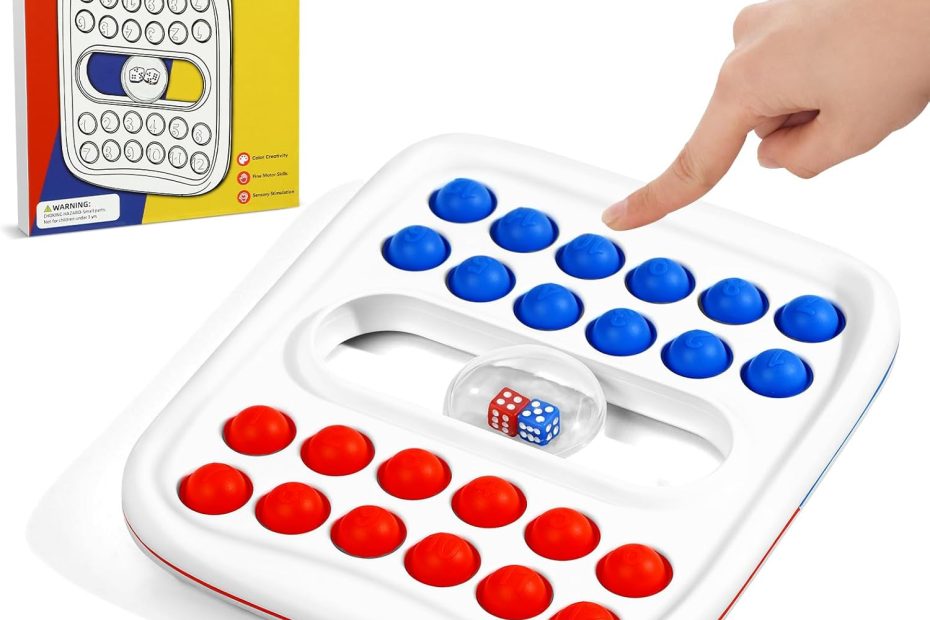
?Are you looking for a fun way to boost your child’s addition and subtraction skills while keeping them entertained?
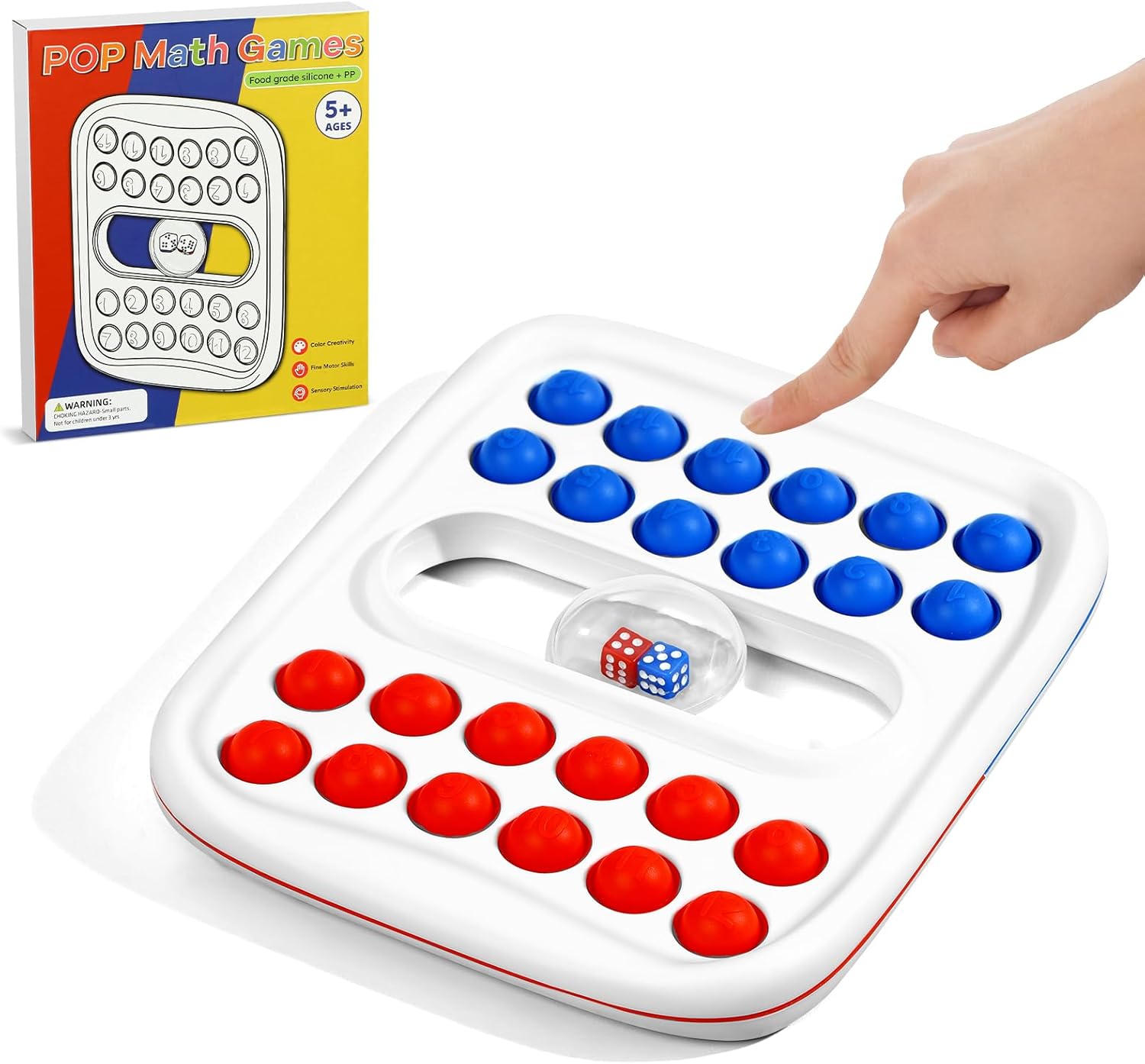

Product Overview
You’ll find the Pop Math Game for Kids – Addition & Subtraction Game – Educational Toys Learning Toys for Kids 4 5 6 7, Math Game for Preschool Kindergarten Boys Girls, 2 Player to be a bright, hands-on option that turns math practice into a game. This toy uses popping bubbles and dice-driven operations to encourage quick mental math, making practice feel like play instead of a chore.
What this game is
You get a compact board with built-in popping bubbles, enclosed dice, and a two-player format that pushes kids to add or subtract quickly. The goal is simple: roll, compute, pop — and be the first to clear your bubbles. That simplicity makes it easy for you to introduce math concepts without long rules or setup time.
Who it’s for
This product is specially designed for kids ages 4 through 7. If you have preschoolers or early elementary students, it’s tailored to their developing number sense, reaction time, and social skills. You’ll notice it works well for both at-home practice and classroom centers.
First Impressions
You’ll likely be struck by the bright colors and tactile satisfaction of popping bubbles. Kids respond to the sensory element immediately, which helps you keep them engaged during short practice sessions. The all-in-one design also means you won’t worry about losing small parts.
Packaging and presentation
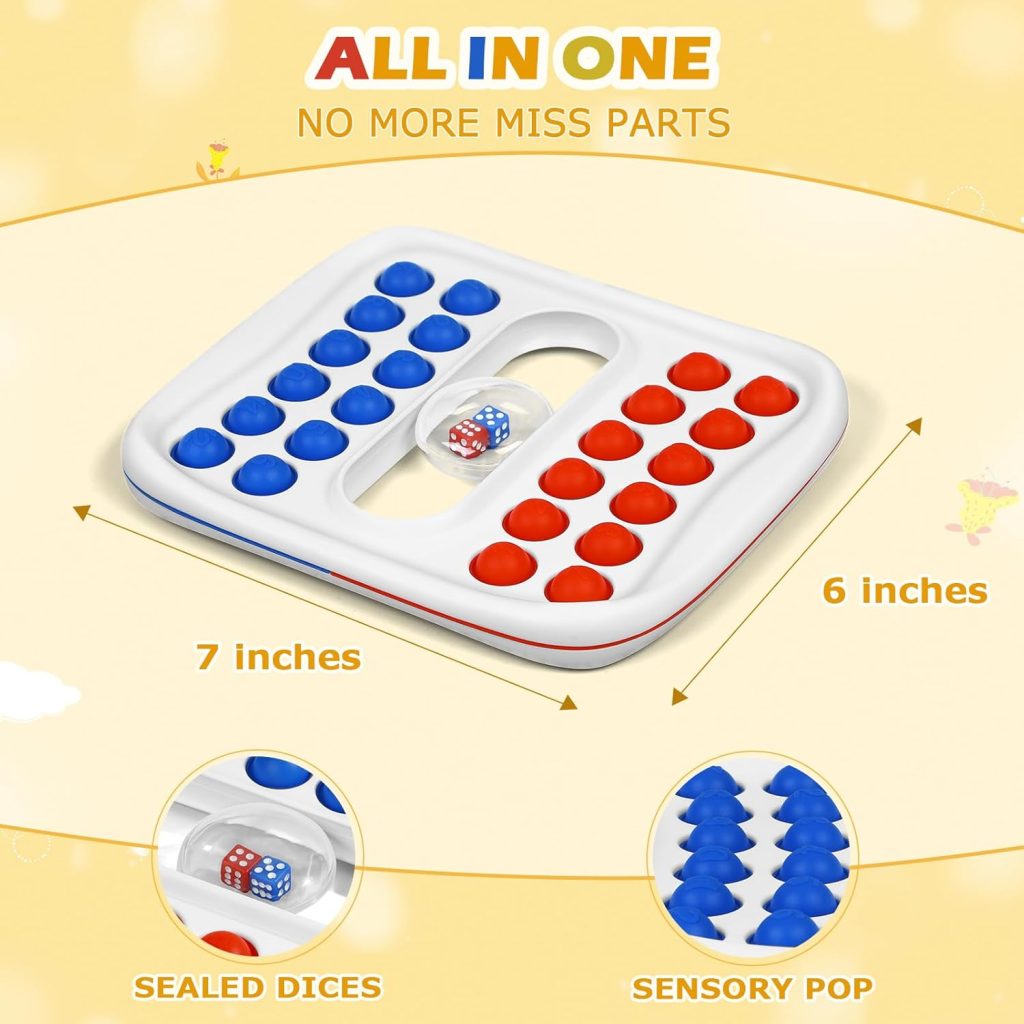
The game comes packaged to highlight its educational focus and portability. You’ll see the intended ages and gameplay features on the box, and the compact dimensions (approximately 7 x 0.78 x 5.9 inches) make it clear this is meant to be an on-the-go learning tool. The dice are enclosed so you won’t have loose pieces rolling away.
First play experience
When your child presses a bubble and hears the satisfying pop, you’ll notice a smile. The immediate reward of hearing and feeling the pop reinforces the math action. Gameplay is fast, so it’s easy to fit a round into short windows of time like car rides or quick learning breaks.

What’s in the Box
You won’t have to hunt for additional components. The box contains an all-in-one board with a grid of poppable bubbles and enclosed dice. That sleek setup eliminates extra parts that could be misplaced.
Components list
- 1 pop math board with multiple bubble slots
- 1 set of enclosed dice (operation dice included)
- Instruction sheet with basic rules
Quality of materials
The materials are lightweight plastic designed to be portable. While not heavy-duty like some wooden toys, the plastic feels sturdy enough for normal handling by young kids. The bubbles have a satisfying tactile response, and the dice mechanism is well integrated into the board.
How to Play
The rules are straightforward so you can start playing quickly. Kids roll the dice, perform an addition or subtraction based on the roll, and pop the corresponding bubbles. Whoever clears their bubbles first wins.
Basic game flow
- Each player gets a side of the board filled with bubbles.
- Players take turns rolling the enclosed dice.
- After each roll, players add or subtract the numbers (based on the dice instruction) and pop the correct number of bubbles.
- The first player to pop all bubbles wins.
Example round
If you roll a 4 and a 2 and the dice instruct you to add, you compute 4 + 2 = 6 and pop six bubbles. If the dice instruct subtraction, you compute 4 – 2 = 2 and pop two bubbles. You can adjust complexity by using only addition, only subtraction, or both as your child’s skill level grows.
Educational Benefits
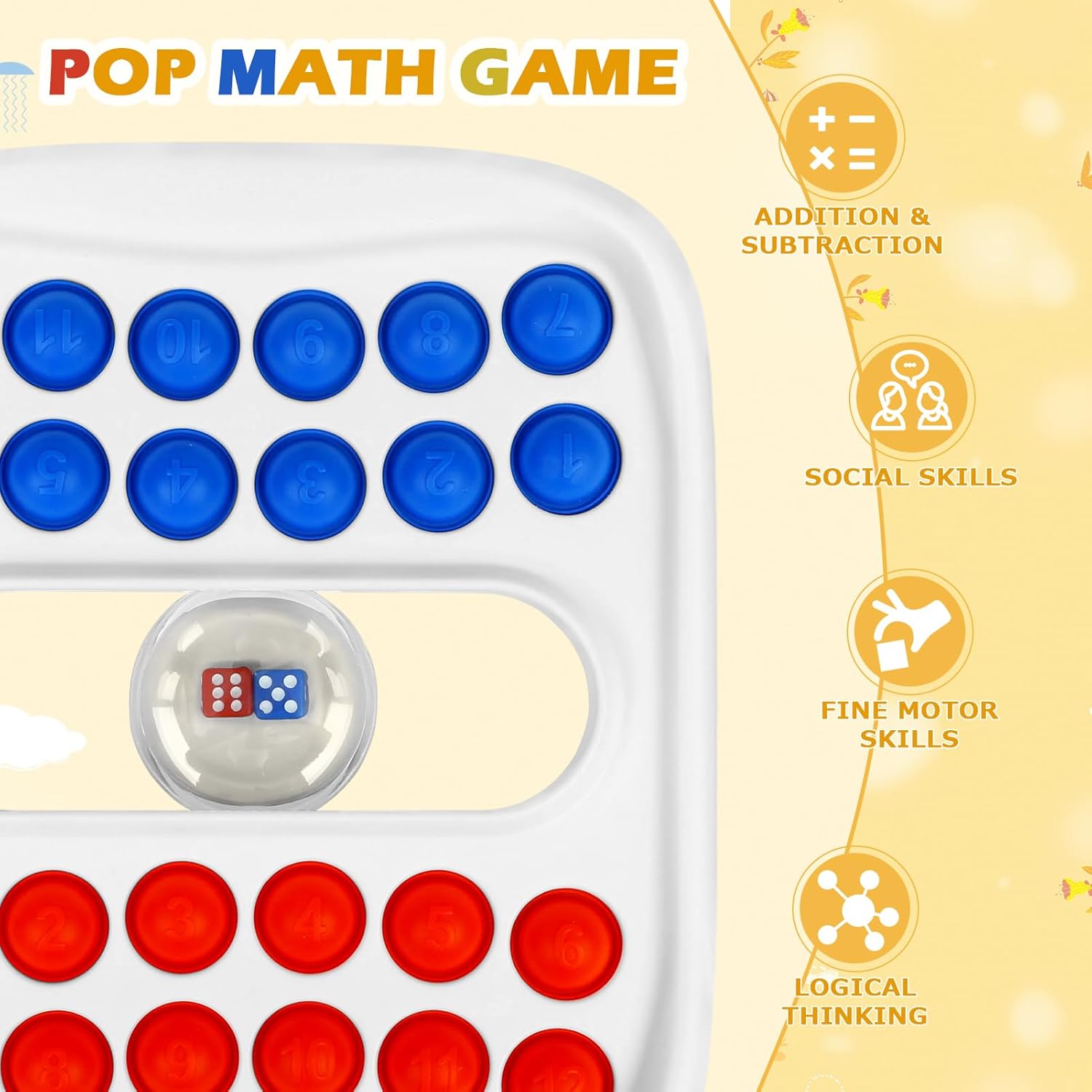
You’ll see multiple learning outcomes from regular play. This game supports number sense, mental math, counting, basic operations, and strategy. It also encourages rule-following and turn-taking.
Math skills developed
The core skills are addition and subtraction within small number ranges, especially sums and differences easily represented by bubble counts. This builds fluency and confidence with basic arithmetic operations.
Cognitive and social benefits
Beyond arithmetic, you’ll find improvements in reaction speed, decision-making under simple constraints, and interpersonal skills like taking turns and following rules. The two-player format encourages a healthy competitive spirit and cooperative learning moments.
Design & Durability
The design focuses on portability and simplicity. You’ll notice an all-in-one mold that keeps dice enclosed and prevents loss. The plastic is lightweight but resilient for normal play. That said, treat it gently to prolong life.
Ergonomics and tactile feedback
The bubbles are easy for small fingers to press and provide immediate sensory feedback. That tactile element makes abstract math more concrete for young learners. The scale is right for preschoolers and kindergartners to handle comfortably.
Durability notes
If you expect heavy daily use in a classroom of many children, you’ll want to monitor for wear over time. For home use and moderate classroom use, the build quality should hold up well. Storing it carefully and avoiding excessive bending will help maintain longevity.
Age Appropriateness and Skill Levels
You can tailor usage based on your child’s ability. The recommended ages 4–7 fit early math milestones, and you’ll find ways to scale difficulty up or down.
For 4-year-olds
You’ll want to focus on simple counting and single-digit addition with visual support. Use the game as a counting and number recognition tool, and keep rounds short.
For 5–6-year-olds
At these ages, children typically begin mastering basic addition and subtraction. You can use both operation dice and create small challenges, such as “pop exactly this many” or “pop the bigger result.”
For 7-year-olds
You can push for faster mental computation and introduce friendly competition for time or accuracy. Consider adding multi-roll sums or simple strategies to increase challenge.
Portability & Practicality
One reason you’ll appreciate this game is that it travels well. The enclosed dice and compact size make it ideal for travel, waiting rooms, or fitting into a backpack.
Dimensions and carrying
The toy measures about 7 x 0.78 x 5.9 inches and is lightweight, so you can easily slip it into a bag or keep it on a shelf. The all-in-one board prevents losing dice, making it practical for on-the-go learning.
Use on the road
If you’re traveling, the popping sound is discrete enough for most contexts, and the board is stable on a lap or table. You’ll have a quick, engaging activity that doubles as learning time during trips.
Use Cases: Home, Classroom, Travel
You’ll find this game flexible for many settings. It’s a great addition to family game time, a learning center in preschool or kindergarten, or an engaging tool during travel.
Home use
At home, you can play with your child to reinforce lessons from school or tutor sessions. The friendly competition motivates practice without the pressure of worksheets.
Classroom use
Teachers can use it as a small-group math center or a reward activity that practices skills. Because it’s two-player, you can rotate students easily and use it for quick assessments of fluency.
Travel and waiting rooms
You’ll appreciate the quick setup and clean play when you need a short distraction that’s also productive. It’s a step above passive screen time and helps keep math skills sharp.
Gameplay Variations and Tips
You can get creative to keep the game fresh and aligned with learning goals. These variations let you adjust for skill level and group size, making the game more versatile.
Solo play adaptation
If your child wants to practice alone, set a timer and have them try to pop all bubbles within a time limit or with a certain number of rolls. You can also make them record sums to reinforce written math.
Team or multiple-player version
Rotate players in a small group and create a tournament bracket for classroom use. Pair older students with younger ones so they can coach and support skill development.
Progressive difficulty settings
Start with addition only, then move to subtraction and mixed operations. Increase challenge by adding multiple rolls per turn and asking kids to compute totals across rolls.
Tips for parents and teachers
- Encourage mental calculation before popping.
- Use finger counting as a transitional strategy if needed.
- Praise strategy and effort, not just speed.
- Use mistakes as teaching moments—ask your child to show how they computed their answer.
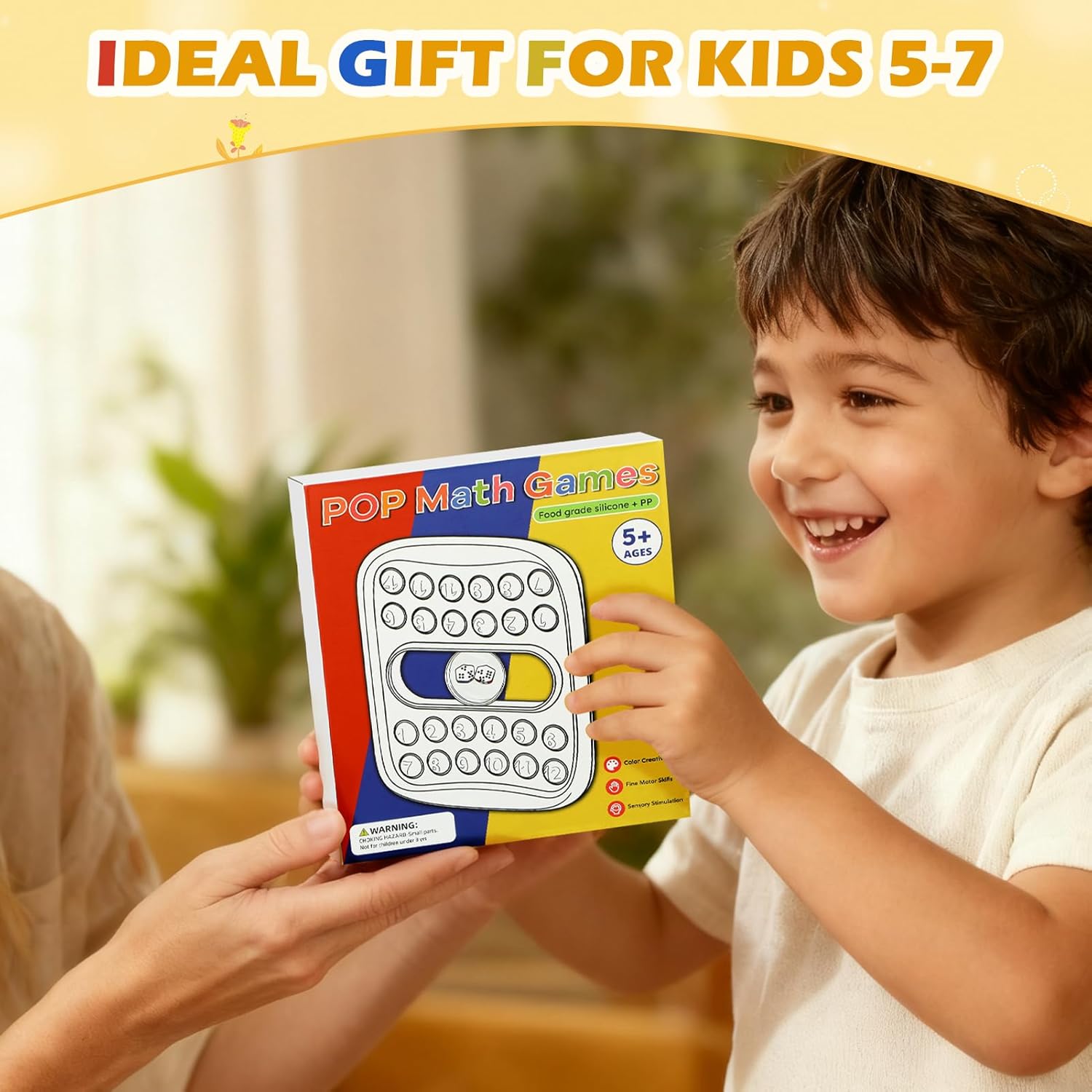
Table: Quick Specs & Skill Breakdown
| Feature | Details | Why it matters to you |
|---|---|---|
| Recommended age | 4–7 years | Matches early math learning milestones |
| Players | 2-player | Encourages social skills and turn-taking |
| Dimensions | ~7 x 0.78 x 5.9 inches | Portable and travel-friendly |
| Components | All-in-one board, enclosed dice | No loose parts to lose |
| Core skills | Addition, subtraction, counting | Builds basic arithmetic fluency |
| Secondary skills | Reaction time, logic, rule-following | Enhances cognitive and social development |
| Use cases | Home, classroom, travel | Flexible, practical for many contexts |
| Durability | Lightweight plastic | Good for home and moderate classroom use |
Pros and Cons
You’ll want an honest overview to decide if this fits your needs. Below are the major strengths and limitations to consider.
Pros
- Quick setup and easy rules make it parent- and teacher-friendly.
- Sensory feedback from popping engages children immediately.
- Enclosed dice and compact form reduce the chance of lost pieces.
- Effective for social play and two-player interaction.
- Portable and lightweight for travel or on-the-go learning.
Cons
- Plastic construction is lightweight and may wear under heavy classroom use.
- Limited to basic arithmetic—older kids may find it less challenging without modifications.
- Two-player format might limit simultaneous use in larger groups (but rotating works).
Comparison with Similar Math Toys
If you’re comparing options, this one stands out for its tactile pop and compact design. While some games use cards or counters, this model uses a satisfying physical action that many kids prefer.
How it compares to flashcards
Flashcards emphasize speed and memorization without tactile elements. You’ll find the Pop Math Game more engaging for kids who need sensory input or physical movement during learning.
How it compares to digital apps
Apps can track progress automatically but often encourage screen time. If you want hands-on interaction that promotes social skills and less screen exposure, this board game is a better fit.
Comparison table
| Item | Engagement | Screen-free | Social interaction | Skill tracking |
|---|---|---|---|---|
| Pop Math Game | High (tactile) | Yes | Two-player social play | Manual (observational) |
| Flashcards | Medium | Yes | Limited (usually one-on-one) | Manual |
| Apps | Variable | No | Can be single or multiplayer | Automated tracking |
Maintenance, Safety & Cleaning
You’ll want to keep the toy clean and safe for repeated use. Maintenance is simple and doesn’t require special tools.
Cleaning tips
Wipe with a damp cloth and mild soap. Avoid submerging or heavy water exposure, as the board contains mechanisms that could be affected. Dry thoroughly before storage.
Safety considerations
Check for any cracks or sharp edges over time. The toy is designed for young kids, so supervision is advised during the earliest stages to ensure proper handling. Because the dice are enclosed, choking hazards are minimized.
Gift Suitability
If you’re shopping for a gift, you’ll find this option thoughtful, practical, and educational. It’s particularly suited for birthdays, holidays, or as a supplementary learning present.
Occasions where it shines
You can give it for birthdays, Easter baskets, Christmas, or as a reward for school milestones. It’s also a good choice when relatives want to give something both fun and useful.
Gift packaging tips
If you’re wrapping it, include a note about how to play and a suggestion to play one round together to get the recipient started. Pairing it with a small number chart or sticker reward system can increase its appeal.
Classroom Implementation Ideas
Teachers can integrate this easily into early math lessons. It works well as a center activity or a quick formative assessment tool.
Lesson plan suggestion (10–15 minutes)
- Warm-up: Review basic addition facts on the board (2 minutes).
- Gameplay: Students rotate through a two-player station and play a round (8–10 minutes).
- Wrap-up: Quick group discussion on strategies and tricky sums (2–3 minutes).
Assessment and differentiation
Use the game to observe which students compute fluently and which rely on counting. Differentiate by assigning simpler operations to some students and mixed operations to others.
Extensions & Activities to Reinforce Learning
You’ll find many ways to expand math lessons using the game as a springboard. These extensions can help you reinforce concepts in varied contexts.
Recording results
Have kids record each roll and resulting sum on a worksheet to connect mental math with written work. This practice supports literacy in math and gives you a trackable record.
Story problems
Create simple story problems that map to the pop actions. For example: “You had 5 bubbles popped, then you popped 3 more. How many did you pop total?” This helps tie operations to real-world thinking.
Combination challenges
Ask kids to add or subtract across multiple rolls and find totals for several turns. That increases working memory and multi-step problem solving.
Troubleshooting Common Issues
If you run into small issues, you can usually fix them quickly. The game is designed for ease of use and maintenance.
Dice not rolling properly
Make sure the enclosed compartment is clear of debris and that the board is on a flat surface. Gentle tapping can free a stuck die.
Bubbles losing pop
If bubbles lose their responsiveness, check for dirt or sticky residue. Wipe the area and let it dry. Handle gently to avoid overstretching the material.
Younger kids getting frustrated
If your child struggles with speed, remove the competitive element and focus on accuracy. Offer praise and small incentives for correct calculations to build confidence.
Who Should Buy This
You’ll appreciate this game if you want a tactile, portable math practice tool that doubles as a social activity. It’s best for families, preschool teachers, and kindergarten classrooms.
Best fit
- Parents who want screen-free, educational toys
- Teachers needing math center activities
- Gift-givers seeking meaningful learning presents
- Caregivers looking to support number sense in early learners
Not ideal for
- Older children (beyond early elementary) seeking advanced math challenges without modifications
- Settings requiring ultra-durable materials for heavy daily use of many children without rotation or supervision
Final Recommendations
You’ll find the Pop Math Game for Kids – Addition & Subtraction Game helpful for building basic math fluency through play. Its tactile appeal, ease of use, and portability make it a useful addition to your learning toolkit. If you pair it with a few simple teaching strategies, it can support lasting math confidence in young learners.
Quick buy decision guide
- Want a simple, tactile math game to practice addition/subtraction? Buy it.
- Need something for older kids without modification? Consider supplementing with more advanced games.
- Want a durable heavy-use classroom tool? Plan on rotation and careful supervision to extend life.
Frequently Asked Questions (Short)
You’ll find these common questions helpful when deciding or using the game.
Is it safe for a 4-year-old?
Yes. It’s designed for 4–7-year-olds and minimizes loose parts by enclosing the dice. Supervision is recommended for younger players.
Can it be used solo?
Yes. You can adapt it for solo play by setting goals like finishing in a certain number of rolls or time.
Is it noisy?
The popping sound is satisfying but generally quiet enough for most home settings. In very quiet public spaces, discretion may be needed.
How long does one game take?
Rounds are short — typically 3–10 minutes depending on rules and skill level — making it perfect for quick practice sessions.
If you want, I can give you specific lesson plans or printable tracking sheets to use with the game, or suggest variations that increase the difficulty for older kids. Which would you prefer?
Disclosure: As an Amazon Associate, I earn from qualifying purchases.